


Choosing office chairs in Australia is rarely a one-size-fits-all decision. The right chair depends on how long people sit, what kind of work they do, and how much space you’re working with. Get it right, and your workspace becomes more comfortable, more functional, and more compliant with health and safety obligations.
The right office chairs make a difference at work
According to Safe Work Australia, musculoskeletal disorders are the leading cause of workers’ compensation claims in Australia, accounting for more than half of all claims. Seating is one of the most direct contributors to that risk in office environments.
Investing in appropriate office chairs is not just about comfort; it’s a practical step toward meeting your duty of care under Australian work health and safety legislation. While the right office chair won’t solve every problem, it eliminates a significant and preventable one.
What makes an office chair ergonomic?
Ergonomic office chairs are commonly found in any office chairs buying guide, and for good reason. These chairs are built for people who spend most of their working day seated. The defining features are adjustability and support: seat height, lumbar support, armrests, seat depth, and tilt tension should all be configurable to suit different body types and work styles. A chair that fits one person well may be entirely wrong for another, which is why adjustability matters more than any single feature.
Breathable mesh backs are common in quality ergonomic chairs because they allow better airflow during long sitting periods, reducing heat and discomfort. Synchro-tilt mechanisms, which allow the seat and backrest to recline in a coordinated ratio, help maintain spinal alignment even when a user shifts position throughout the day. These are the kinds of features worth looking for if staff routinely work extended hours at a desk.
It is also worth checking for compliance with Australian standards. AS/NZS 4438:1997 is the principal standard governing height-adjustable swivel chairs in Australia. AFRDI Level 6 Blue Tick certification, issued by the Australasian Furnishing Research and Development Institute, tests chairs against anthropometric data, structural strength for users up to 135 kg, and durability through thousands of simulated use cycles. Both are worth verifying before purchasing, particularly for government and education procurement.
Office chairs for back pain: what to look for
Back pain is one of the most cited reasons employees ask for chair upgrades, and it is a legitimate concern. Sedentary work puts sustained load on the lumbar spine, and chairs that lack proper support accelerate that strain over time. The features most relevant to back pain management are dynamic lumbar support, waterfall seat edges (which reduce pressure on the back of the thighs), and adjustable seat depth.
Memory foam cushioning adds comfort but is not a substitute for structural support. A chair with firm, well-positioned lumbar support will do more for back pain than a heavily padded seat with no adjustability. For workplaces where staff have existing injuries or conditions, prioritise chairs with a wider range of height and tilt adjustment, and if the budget allows it, consider seeking an ergonomic assessment for individual workstations.
Visitor chairs for office
Visitor seating is often treated as an afterthought, but it influences how clients, patients, and guests experience your organisation from the moment they arrive. Reception areas, waiting rooms, and meeting spaces can all benefit from chairs that are comfortable enough for a 30 to 60-minute wait. Safety, ease of cleaning, and durability matter as much as how the chair looks.
Stackable visitor chairs are practical for offices where space is shared or reconfigured regularly. Sled-base designs are stable and compact, fitting neatly in rows without taking up unnecessary floor space. Upholstered options add warmth to clinics or formal settings, while hard-shell seats in polypropylene or moulded plastic hold up better in high-traffic environments like school front offices or hospital waiting rooms.
Modern boardroom chairs
Exec and boardroom chairs serve a dual purpose: they need to look the part during presentations and stakeholder meetings, and they need to be comfortable enough for sessions that run two or three hours. Because of this reason, boardroom chairs should neither be purely decorative nor too casual. The right boardroom chair should strike a balance between professional appearance and functional support.
Leather and eco-leather finishes remain the most common choice for boardroom settings because they convey a professional standard and are straightforward to wipe down between meetings. Mesh-back options are worth considering in warmer climates or for rooms with limited air conditioning, where breathability is a practical necessity. Either way, seat padding and lumbar support should not be sacrificed for the sake of appearance alone.
Meeting room chairs in Australia
Meeting rooms present a different challenge to boardrooms. They tend to be used heavily by different teams throughout the day, reconfigured between sessions, and sometimes repurposed for training, workshops, or presentations. As such, meeting room chairs need to be functional across different uses, easy to move, and reasonably comfortable for sessions of varying lengths.
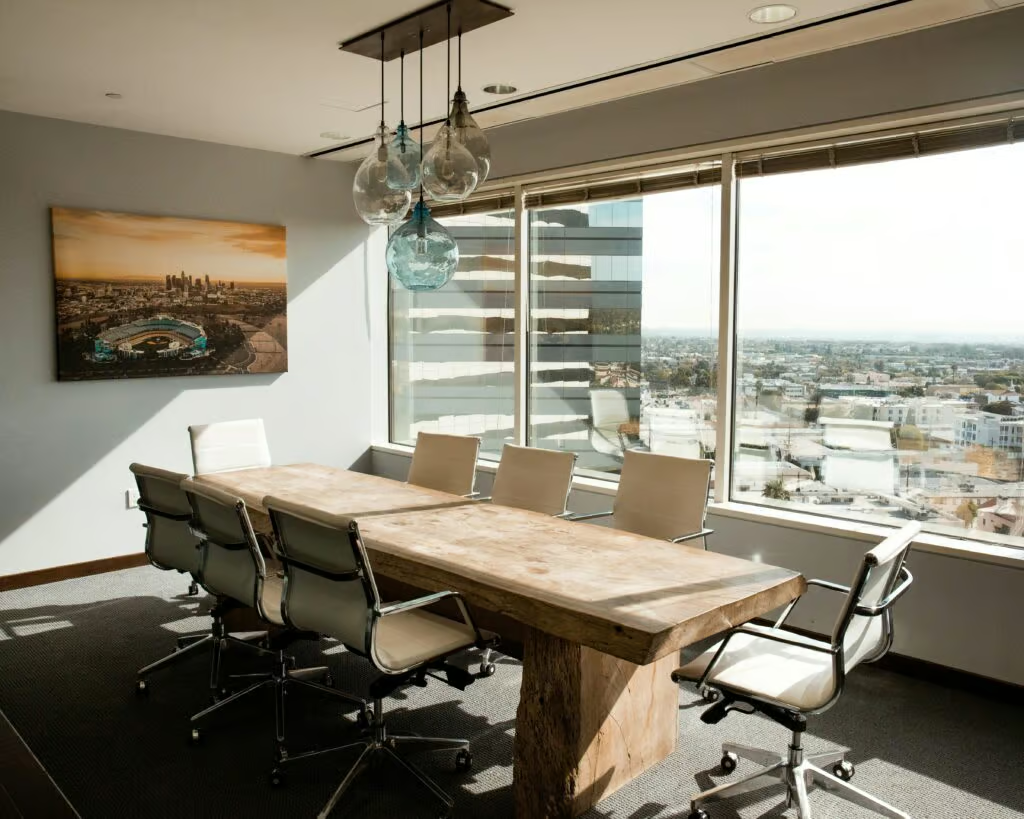
Stackable or folding chairs are the obvious answer for rooms that need to be cleared quickly, but they do not have to be basic. Contoured backs and modest seat padding make a real difference in rooms where meetings regularly run beyond an hour. Linking brackets, which allow chairs to be connected in rows, can come in handy for presentations or multi-day training sessions.
Matching chairs to your workspace
Setting | Key Priorities | Recommended Chair Type |
Task workstations | Adjustability, lumbar support, durability | Ergonomic task chair |
Reception/ waiting areas | Comfort, durability, easy to clean | Visitor or sled-based chair |
Boardroom | Professional appearance, padding, support | Executive or leather-finish chair |
Meeting rooms | Mobility, stackability, moderate comfort | Stackable or folding chair |
Most workplaces need more than one type of chair. Categorising your spaces before you shop, by function rather than by floor plan, helps match chair specifications to actual usage. A task chair chosen for reception seating will look out of place and wear faster than intended; a visitor chair at a full-time workstation will cause discomfort within weeks.
While budget is always a factor, it helps to think about ergonomic office chairs in terms of cost per hour of use rather than upfront price. A well-built chair used eight hours a day across several years will outperform and outlast a cheaper option by a significant margin. The same logic applies to indirect costs: if a poorly specified chair contributes to a workers’ compensation claim, the chair’s original price becomes irrelevant.