

Productivity doesn’t start when you open your laptop or walk into a classroom, it starts the moment you step into your space. A cluttered desk quietly competes for your attention, pulling focus away from what really matters.
Piles of paper, tangled cables, and overflowing supplies don’t just look untidy, they actively create friction in your day. They slow decision-making, increase stress, and make even simple tasks feel heavier than they should.
A study by Economist Impact, commissioned by Dropbox, found that Australian workers lose up to 600 hours a year to distractions and inefficiencies, equivalent to more than 15 full workweeks annually.
In education settings, the 2023 Australian Education Research Organisation (AERO) report highlights that well-structured classrooms improve student engagement, reduce transition time between activities, and support better behaviour management.
If you’re looking to boost productivity, your desk is the best place to start. An organised workspace makes it easier to focus, find what you need, and stay in flow.
That’s where Get Organised Day comes in, a timely reminder to reset your environment with small, practical changes that make a big difference, especially as you step into a new quarter.
Why Desk Decluttering Matters
Clutter doesn’t just affect your space; it directly impacts how your brain works and how you behave. Clutter is strongly associated with increased stress, emotional exhaustion, and even burnout.
1. Improves Focus and Mental Clarity: Every visible item is a small “attention pull,” making it harder for your brain to concentrate on one task. A clean desk reduces cognitive overload and helps you think more clearly.
2. Boosts Productivity and Decision-Making: When your workspace is organised, you spend less time searching for things or deciding what to do next. This reduces decision fatigue and helps you move more efficiently through tasks.
3. Encourages Better Work Habits: A tidy desk naturally supports structured thinking. It becomes easier to prioritise tasks, stick to routines, and maintain momentum, especially during busy work periods.
4. Creates a Sense of Control: Your workspace is one of the few environments you can fully manage. Keeping it organised builds a subtle but powerful sense of control, which can improve motivation and confidence.
5. Supports Healthier Work Boundaries: A clear desk can signal “start” and “finish” to your workday. This helps separate work from personal time, especially for hybrid or remote workers.
Tips for Decluttering Your Workspace:
1. Reset Your Workspace
One of the most effective ways to start decluttering is by fully resetting your desk. Clearing everything off the surface gives you a fresh perspective and immediately helps improve focus.
This reset creates both a physical and mental shift. Wiping down surfaces, cleaning equipment, and disinfecting high-touch areas signals a fresh start and helps restore a sense of control. Maintaining a hygienic and organised workspace is easier with the right office cleaning products, which support a consistently clean environment and better working conditions.
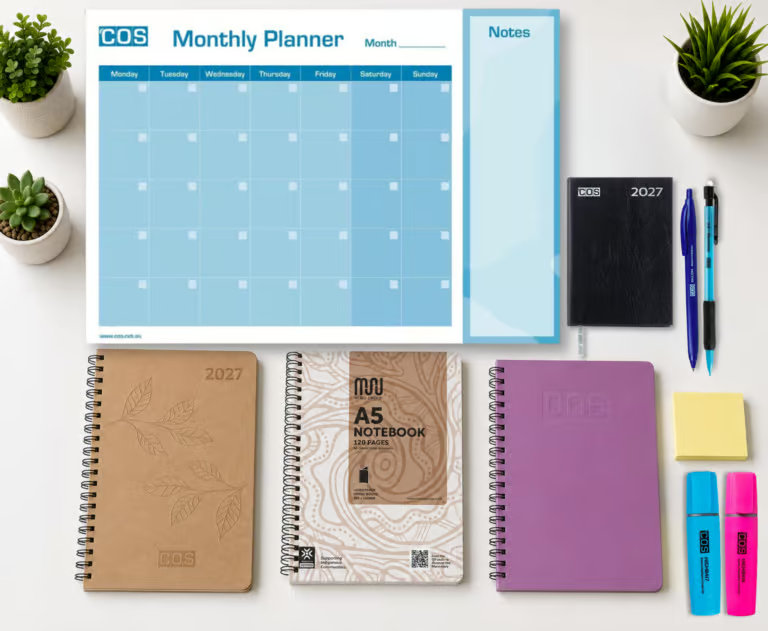
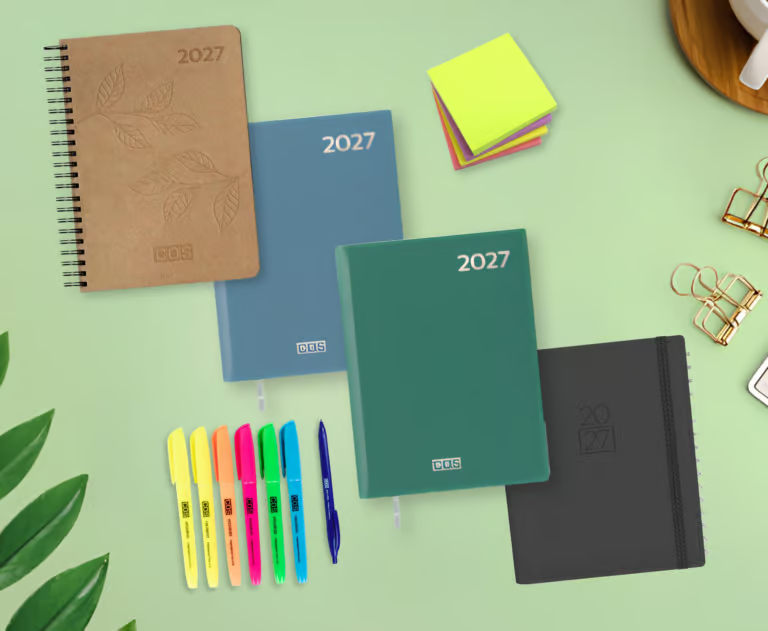
Once you reset, be intentional about what returns to your space. In office settings, keep only daily essentials such as your laptop, planner, notebook, and core stationery. In classrooms, prioritise teaching materials like lesson plans, attendance records, and frequently used resources and tools, while storing student materials separately to reduce clutter.
2. Sort Everything into Clear Categories
After clearing your desk, the next step is to organise all items into clear categories: keep, store, discard, or relocate. Clutter often builds due to indecision, so assigning every item a purpose removes uncertainty and prevents unnecessary accumulation.
Everyday tools such as your laptop, notebook, or favourite pen or pencil should stay within easy reach. Less frequently used items can be stored in drawers or cabinets, while anything no longer useful should be recycled or discarded in bins such as general waste for non-recyclable items, paper and cardboard recycling for documents and packaging, dedicated e-waste bins for old electronics like cables, chargers, or broken devices, and Container Deposit Scheme Recycling Bin for all your bottles and cans.
3. Proper Drawer & Desk Organisation
One of the most practical and often overlooked tools for maintaining an organised workspace is the drawer organiser. These simple but essential accessories help keep stationery neatly arranged and easily accessible, ensuring your desk stays functional and clutter-free.
Use Drawer tidy to create dedicated sections for items like paperclips, staples, sticky notes, and calculators so everything has a clear place. Support your setup with desktop document trays, pen holders, and mobile pedestals to keep frequently used tools within easy reach, forming part of effective office storage solutions.
In classrooms and creative spaces, tote trays and shelving bays are ideal for organising learning materials and art & craft supplies such as pencils, markers, paint brushes, scissors, glue sticks, and paper.
4. Create Functional Desk Zones
Dividing your desk into clearly defined zones can transform how efficiently you work. Rather than using your desk as one cluttered surface, think of it as a set of purpose-driven areas, each designed to support a specific task.
For example:
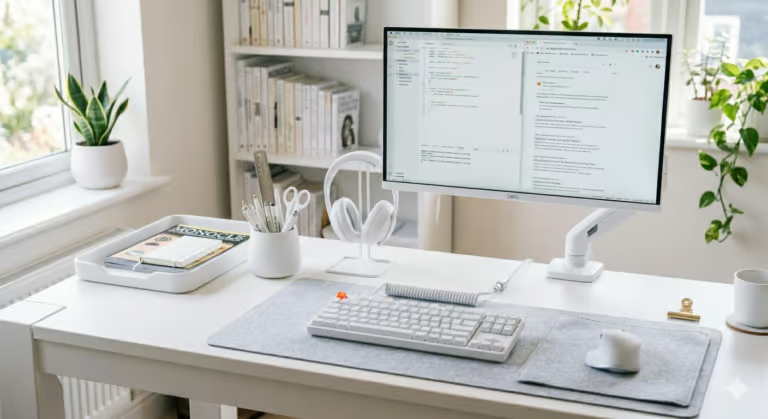
- Main work zone: This is your primary focus area, where your laptop, monitor, and keyboard sit. Keep this space clean and free from unnecessary items to minimise visual clutter and maximise concentration.
- Writing zone: Dedicate a section for notebooks, planners, and pens. Having these items grouped together makes it easier to jot down notes or brainstorm ideas without interrupting your workflow.
- Storage zone: Use this area for documents, files, chargers, and other essentials you don’t need constantly but still want within reach. Drawer organisers, trays, or file holders work well here to keep everything tidy.
- Personal zone: Add a touch of personality with items like a small plant, photos, or a decorative piece. This space makes your desk feel more inviting without interfering with productivity.
5. Use Wall & Vertical Space
Maximise your workspace by shifting items off your desk and onto vertical surfaces, freeing up valuable room for focused tasks.
In offices, wall-mounted organisers, floating shelves, and pinboards help keep documents, reminders, to-do lists, and timelines visible without creating clutter.
In classrooms, vertical solutions such as whiteboards, pinboards, or corkboards are especially effective for displaying lesson plans, visual aids, and student work. Keeping key information at eye level reinforces learning, encourages engagement, and maintains a tidy, distraction-free environment.
6. Implement Smart Storage Systems
A balanced mix of open and closed storage is key to maintaining organised, functional offices and classrooms, supported by smart office storage solutions.
Open trays are perfect for active projects and frequently used materials, while closed drawers and cabinets keep archived files and surplus supplies neatly out of sight. In classrooms, clearly labelled bins or tubs help categorise resources by subject or activity, making them easy to locate and return.
Flexible solutions such as stackable containers and mobile trolleys, allow storage to adapt as needs change. Clear, consistent labelling is essential: when everything has a designated place, time spent searching is reduced and shared responsibility is encouraged.
In schools, incorporating lockers and credenzas can helps both teachers and students manage personal and group resources without cluttering shared spaces.
7. Manage Cables & Tech Clutter
Cables are one of the most common sources of visual clutter. If left unmanaged, they create mess, reduce efficiency, and can even pose safety risks.
In offices, cable clips, sleeves, cable ties, and under-desk trays help keep cords hidden and organised. In classrooms, where multiple devices are used, designated charging stations can help prevent tangled cables and reduce hazards.
Standardising device placement, such as keeping all laptops or tablets in one area can also help maintain order. Limiting the number of devices on the desk further reduces visual distraction.
8. Create a Filing System
A structured filing system is essential for managing documents efficiently and keeping your workspace running smoothly. Without a clear system in place, paperwork can quickly become overwhelming, leading to lost time and unnecessary stress.
In offices, organise files into logical categories such as finance, administration, HR, and projects. Within each category, use subfolders or colour-coded sections to make navigation even easier. In classrooms, categories might include lesson plans, assessments, student records, and teaching resources, ensuring everything you need is easy to locate, even during a busy school day.
A practical filing system combines both physical and digital organisation. Use clearly labelled folders, drawer systems, colour-coded labels or document boxes for hard copies, and mirror the same structure digitally for easy cross-referencing. Consistency is key, once you establish a system, stick to it.
Labels are your best ally when filing. Taking a few extra minutes to clearly label folders, tabs, and storage boxes will make retrieving documents quicker and far less frustrating.
9. Audit Your Supplies
A regular supply audit helps regain control over excess or unused materials. In offices, this often reveals duplicate stationery or outdated equipment. In classrooms, it may uncover unused learning resources or incomplete kits.
Remove broken or unnecessary items, group similar supplies together, and establish clear stock levels to avoid over-ordering. A recent article by Procurement & Supply Australasia (PASA) highlights COS research showing that 47.7% of Australian employees report that poor-quality or outdated supplies disrupt productivity, while 20.5% rely on personal items to stay efficient.
10. Improve Ergonomics & Comfort
In offices, a well-designed desk setup improves both comfort and organisation. Position monitors at eye level, keep keyboards and mice within easy reach, and use supportive seating to reduce strain and maintain good posture.
Ergonomic desk solutions such as monitor stands, keyboard and mouse pads, sit-stand desks, under-desk storage, and cable organisers help declutter surfaces and create a more efficient workspace.
In classrooms, ergonomic desks and chairs, adjustable student desks, slanted writing boards, and desktop organisers help maintain better posture and keep learning materials tidy and accessible. Desk storage trays and compact caddies also support organisation by keeping frequently used items within reach.
Supportive accessories like footrests and anti-fatigue mats further improve comfort in both settings, encouraging movement, reducing fatigue, and supporting sustained focus throughout the day.