


The most successful organisations don’t just hire talented people, they create environments where those people continuously grow. Building a genuine learning culture is no longer just nice to have in a landscape where 7 in 10 Australian workers will need to upskill or reskill over the next five years.
Creating a workplace learning culture goes beyond implementing a mandatory training calendar or setting aside a training budget. It requires thoughtful design of both formal and informal learning opportunities supported by spaces that make knowledge-sharing natural.
Here’s how to foster continuous learning, from casual lunch-and-learns to purpose-built training environments.
Why Building a Learning Culture at Work Matters Now
There’s a clear business case for workplace learning. Organisations that provide learning opportunities report it as their number one employee retention strategy, with 94% of employees saying they would stay at a company longer if it invested in their development. However, 50% of organisations say managers lack proper support to facilitate career development, revealing a critical gap between intention and execution.
The challenge isn’t in creating and launching programs, it’s in fostering cultures. Training catalogues gather digital dust when learning feels disconnected from daily work. Expensive courses fail when employees can’t apply new knowledge immediately. Organisations with thriving learning cultures understand that it’s not about the number of courses an employee completes, but more about normalising curiosity, welcoming questions, and weaving knowledge-sharing into how work happens.
Informal Learning: Where Culture Actually Lives
A recent learning and development report showed that 86% of employees picks up new skills by figuring things out on the job. This informal learning represents most actual skill development, yet it rarely receives adequate support.
Lunch-and-Learns That Actually Work
Effective lunch-and-learns feel less like presentations and more like conversations. Encourage team members to share expertise, whether mastering a software tool, navigating a challenging project, or conference insights.
Create comfortable environments supporting these sessions. Collaborative spaces with flexible seating allow natural engagement, with people in collaborative environments remaining focused on tasks 64% longer than those working individually.
Knowledge-Sharing Rituals
Build regular touchpoints for organic learning. Think weekly team retrospectives extracting project lessons, monthly skill demonstrations, quarterly cross-departmental exchanges, and daily stand-ups including brief knowledge moments. The key is consistency and psychological safety.
Structured Training: Spaces That Support Serious Learning

While informal learning builds culture, structured training develops capabilities systematically. The physical environment where this training occurs significantly impacts its effectiveness.
Designing Effective Training Rooms
Training rooms aren’t just smaller meeting rooms with extra chairs. They’re purpose-built environments optimised for concentration, collaboration, and knowledge retention. Consider these elements:
Flexible Furniture Arrangements: Training room seating should adapt to different learning activities. Stackable chairs with contoured backs and modest padding support extended sessions without discomfort, while linking brackets connect chairs in rows for presentations or workshops. For maximum flexibility, choose furniture that transitions easily between lecture-style, small-group collaboration, and individual work configurations.
Proper Tables and Work Surfaces: Meeting tables in training environments need sufficient surface area for laptops, notebooks, and materials without crowding. Adjustable or modular tables allow trainers to reconfigure spaces quickly between activities, supporting the varied learning styles and group sizes that effective training requires.
Visual Learning Tools: Whiteboards and flipcharts remain essential despite digital alternatives. There’s cognitive value in watching concepts develop visually in real-time that screen-sharing can’t replicate. Mobile whiteboards with double-sided surfaces and 360-degree pivots work particularly well for presentations and conferences, while magnetic whiteboard and flipchart easels combine functionality for training environments requiring both note-taking and visual demonstration.
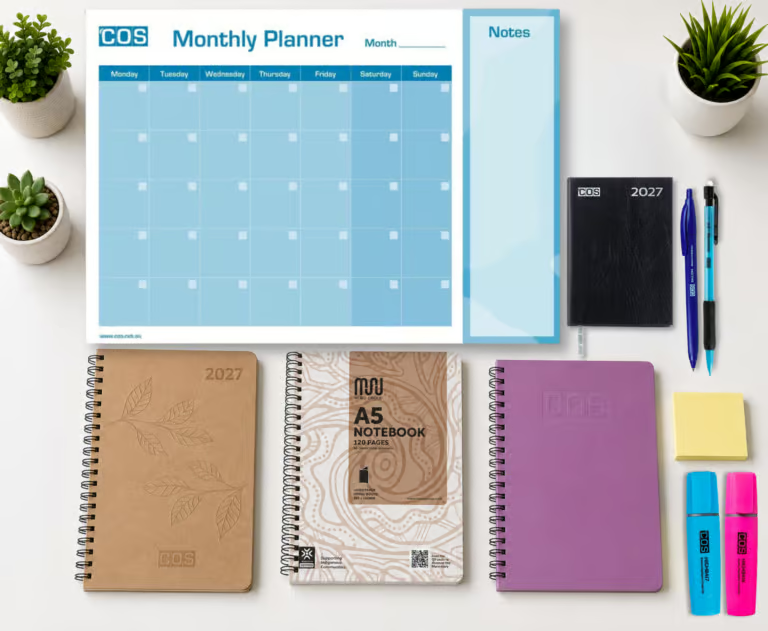
Presentation Supplies: Stock training rooms with markers, sticky notes, and flipchart pads perfect for brainstorming and planning sessions. Having these tools immediately accessible removes friction from spontaneous idea generation and collaborative problem-solving.
Comfort Considerations: Training sessions often run beyond an hour. Meeting room chairs should balance professional appearance with functional support. Contoured backs and appropriate padding make real differences in rooms where training regularly extends through multi-day programs.
Creating a Continuous Learning Infrastructure

Physical spaces support learning culture, but infrastructure sustains it.
Make Learning Visible
Create dedicated spaces showcasing learning resources, upcoming training opportunities, and employee skill development achievements. Digital displays, bulletin boards in common areas, and intranet portals dedicated to learning opportunities keep development top-of-mind rather than out-of-sight.
When collaborative spaces are thoughtfully designed, they strengthen organisational culture and team atmosphere while supporting innovation. Apply this same principle to learning spaces; make them inviting places people want to spend time rather than sterile rooms they endure.
Support Manager Enablement
Managers are the primary enablers of learning culture when properly supported. Equip managers with:
- Simple frameworks for development conversations
- Time allocated specifically for team learning activities
- Resources to identify skill gaps and learning opportunities
- Recognition for championing team development
Embed Learning in Workflow
The most effective learning happens in context. Rather than pulling employees out of work for training, bring training into the flow of work:
- Just-in-time microlearning modules available when facing new tasks
- Peer mentoring programs pairing experienced staff with those developing skills
- On-the-job shadowing and cross-functional rotations
- Project-based learning where teams tackle real challenges while building capabilities
Measuring What Matters
Learning culture can’t be measured solely by training hours completed or courses passed. Look for indicators like:
- Employee-initiated learning activities and peer knowledge-sharing
- Application of new skills in daily work
- Cross-functional collaboration frequency
- Internal mobility and promotions from within
- Voluntary participation in optional learning opportunities
Overcoming Common Barriers
“We don’t have time for learning”
This objection reveals learning is perceived as separate from work. Reframe it: learning is work. Building skills improves performance, reduces errors, and increases efficiency. Time spent learning returns dividends in productivity.
“Our training budget is limited”
The most impactful learning often costs little. Peer coaching, lunch-and-learns, job shadowing, and cross-training leverage existing expertise. Invest in creating spaces and routines that facilitate these activities rather than expensive external programs.
“Employees aren’t engaged with training”
Engagement follows relevance. Ensure training addresses genuine needs, allows choice in learning pathways, and connects clearly to career progression or immediate job performance. When learning feels like a tick-box exercise, engagement disappears.
The Investment That Compounds
Building workplace learning culture requires thoughtful investment in both mindset and infrastructure. From whiteboards and training room furniture to manager enablement and knowledge-sharing rituals, each element contributes to an environment where continuous development feels natural rather than forced.
Organisations that embed learning into their culture don’t just retain talent, they build adaptive, resilient teams capable of navigating whatever challenges emerge. That capability, more than any single training program, represents the true competitive advantage of a strong learning culture.