

Across Australia, thousands of apple cores, banana peels, and sandwich crusts disappear into rubbish bins every school day. What if those food scraps could become something remarkable? What if your school’s food waste could transform into rich soil for a thriving garden, teaching students invaluable lessons about sustainability, science, and environmental responsibility?
Starting school composting programs isn’t just an eco-school idea, it’s a powerful opportunity to reduce waste, save money, and create hands-on learning experiences. Here’s everything you need to know to turn your school’s food waste into black gold.
Food Waste by the Numbers
Australians throw away at least 7.6 million tonnes of food annually. Schools contribute significantly to this figure, with organic waste making up approximately 40% of school waste streams. When this organic material ends up in landfill, it decomposes anaerobically and produces methane, a greenhouse gas 25 times more potent than carbon dioxide.
Approximately 92% of household food waste still goes directly to landfill, where it contributes to 3% of Australia’s annual greenhouse gas emissions. By composting at school, students become part of the solution, actively reducing their environmental impact in a way they can see, touch, and measure.
From July 2026, NSW schools will join other businesses in being required to separate food waste for recycling under new government regulations. Starting your composting program now means your school will be ahead of the curve, prepared for upcoming requirements while already reaping the educational and environmental benefits.
Setting Up Your School Composting System

Choose your composting method
Schools have several composting options:
- Traditional Compost Bins: Perfect for larger schools with outdoor space. Position bins in shaded areas accessible to classrooms but away from main buildings.
- Worm Farms: Ideal for younger students who love hands-on learning. Worms provide visible, interactive elements that make composting tangible and exciting.
- Bokashi Systems: Compact and suitable for limited outdoor space. These sealed systems ferment food waste using beneficial microorganisms, handling items traditional composting can’t process.
Create collection systems
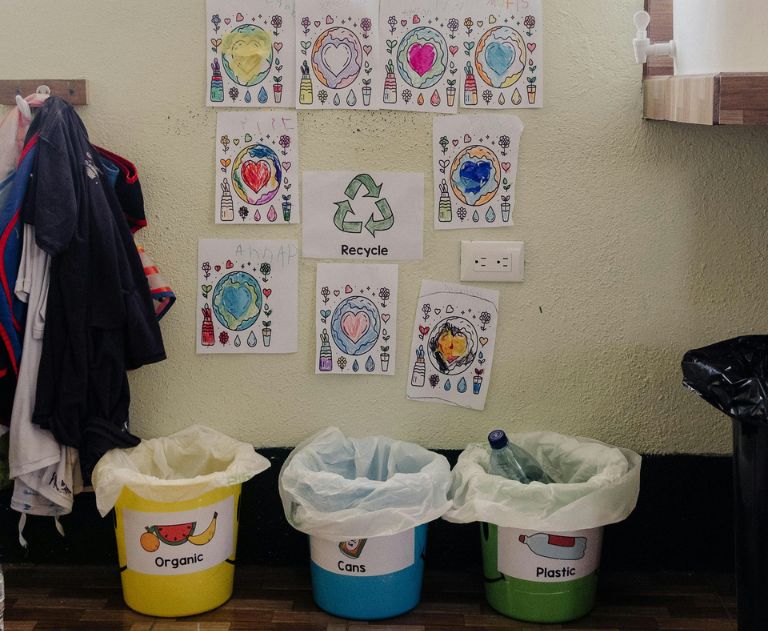
Place clearly labelled collection containers in cafeterias, staff rooms, and outdoor eating areas. Proper labelling significantly increases participation rates, with research showing visible bin signage dramatically improves sorting accuracy.
Consider a centralised waste management approach with colour-coded bins. Green-lidded bins for organic waste, yellow for recyclables, and red for general waste create visual cues even young students can follow.
Establish clear guidelines
Create simple, visual guides showing what can and cannot be composted. Generally acceptable items include fruit and vegetable scraps, coffee grounds and tea bags, eggshells, grass clippings and leaves, and shredded paper and cardboard.
Items to avoid include meat, dairy, oils, and pet waste, which can attract pests and slow the composting process. Display these guidelines prominently at collection points and in classrooms.
Engaging Students Through Classroom Sustainability Activities
The real magic of school composting programs lies in the learning opportunities they create.
Make it hands-on
Assign classroom compost monitors who rotate weekly, giving every student ownership of the program. These monitors collect scraps, monitor bin contamination, and report to the class about progress. For younger students, this responsibility builds pride and accountability. For older students, it provides data collection opportunities for science investigations.
Connect to curriculum
Composting naturally integrates across subjects:
- Science: Study decomposition, microorganisms, chemical reactions, and ecosystems
- Mathematics: Calculate waste reduction percentages, measure compost temperatures, graph decomposition rates
- English: Write persuasive texts about sustainability, create how-to guides for composting
- Art: Design bin signage, create educational posters, build scarecrows from compost-grown produce
Sustainable classroom activities that incorporate composting transform abstract environmental concepts into concrete, meaningful experiences.
Gamify the process
Competition motivates participation. Gamification of waste management has proven highly effective, making waste reduction fun while building sustainable habits.
Create leaderboards tracking each classroom’s composting contributions. Award points for correctly sorted waste or zero-contamination weeks. Consider rewards like extra outdoor time, pizza parties using garden-grown ingredients, or certificates recognising environmental leadership.
From Compost to Garden: Closing the Loop
The most rewarding aspect of school composting is watching the cycle complete.
Establish school gardens
Use finished compost to establish vegetable gardens, native plant areas, or even simple container gardens if space is limited. School garden projects teach students about where food comes from while showing the tangible results of their composting efforts.
When students eat salad grown in soil enriched by last month’s lunch scraps, the connection between waste reduction and food production becomes beautifully clear. This closed loop transforms abstract environmental concepts into lived experience.
Partner with the community
Share excess compost with families for home gardens, creating connections between school sustainability initiatives and community environmental action. Some schools sell bags of finished compost at parent events, funding further environmental programs while spreading sustainable practices beyond school gates.
Consider partnering with local community gardens or environmental organisations for tree planting events, composting workshops, or sustainability fairs that position your school as an environmental leader in your area.
Overcoming Common Challenges
- Odour Management: Properly maintained compost shouldn’t smell. If odours develop, the system likely has too much nitrogen-rich material (food scraps) and not enough carbon (dried leaves, shredded paper). Adjust the balance and ensure adequate aeration.
- Pest Prevention: Avoid composting meat, dairy, and oily foods. Keep bins covered and ensure systems have proper ventilation. Position bins away from buildings and maintain them regularly.
- Contamination: Initial contamination is normal as students learn the system. Appoint older students as “compost champions” who educate younger peers and conduct regular bin checks. Clear labelling and waste sorting education dramatically reduces contamination over time.
- Maintenance During Holidays: Develop a maintenance roster involving willing staff or families. Alternatively, reduce active composting during extended breaks and resume when students return.
Measuring Success and Celebrating Impact
Track your program’s impact to maintain momentum and demonstrate success:
- Weigh food waste diverted from landfill monthly
- Calculate cost savings from reduced general waste collection
- Measure compost produced and soil enrichment achieved
- Survey student knowledge about composting and sustainability
Share these achievements in newsletters, assemblies, and social media. When students see concrete evidence of their impact, their engagement deepens and sustainable habits strengthen.
School composting programs succeed when they’re simple, visible, and celebrated. Make bins accessible, signage clear, and progress visible. Acknowledge student efforts regularly, connecting their daily actions to meaningful environmental outcomes.
Your school’s food waste represents opportunities for learning, for environmental action, for demonstrating that sustainable choices aren’t sacrifices but improvements. From apple cores to garden soil, from lunchbox to garden, your composting program can transform how students understand their relationship with the environment.