


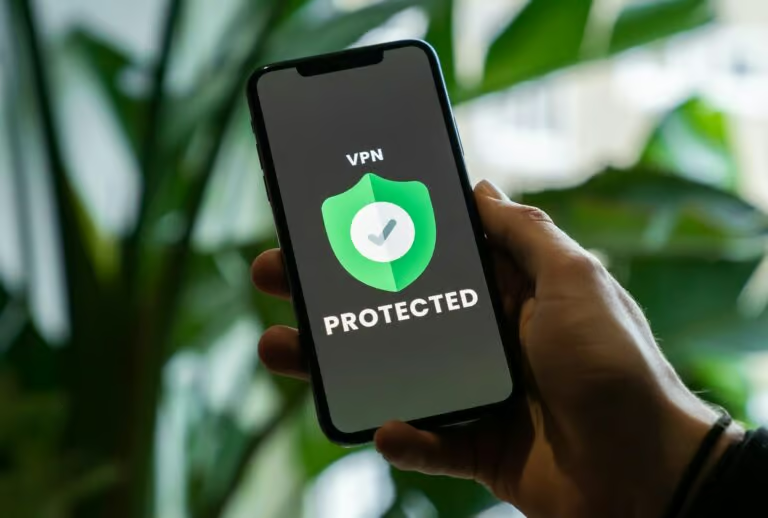
Data privacy compliance is a major responsibility that can affect the business’s reputation and operational continuity. Data breaches, whether caused by cyberattacks, system failures, or human error, can disrupt day-to-day operations, damage trust with employees and customers, and expose organisations to legal and financial risks.
Every workplace deals with information that needs protection, whether it’s customer contact details, employee records, or financial data. With stricter data privacy regulations in Australia, the constant threat of cyberattacks, and increasing reliance on digital systems, it’s important to understand the basics of data privacy.
Data Privacy Compliance and Why It Matters
Australian organisations are subject to privacy laws that govern how personal and sensitive information is collected, used, stored, and disclosed. These laws apply to many private businesses, government agencies, schools, and not-for-profits.
These obligations apply regardless of the size of the organisation. Even small workplaces that handle employee records, customer contact details, or payment information are expected to take reasonable steps to protect the data they collect and hold. Failure to meet privacy obligations can lead to:
- Regulatory investigations or enforcement action
- Financial penalties and remediation costs
- Mandatory data breach notifications
- Reputational damage and loss of trust among staff and customers
Data privacy and workplace cybersecurity are closely related. Having solid workplace cybersecurity practices can help prevent unauthorised access, and comprehensive data privacy policies can effectively guide employees on how to handle information if systems should be compromised.
What Counts as Sensitive Information?
Sensitive information is any data that could cause harm, distress, or disadvantage to an individual or organisation if it is misused, disclosed without permission, or accessed by unauthorised parties.
The table below outlines some of the most common types of information handled in the workplace. This is not an exhaustive list, but it highlights the areas where strong data privacy and security controls are most critical.
Common types of sensitive workplace information
Category | What it includes | Examples |
Personal information | Data that identifies an individual, either directly or indirectly |
|
Financial information | Information related to payments, banking, and financial transactions |
|
Employee records | Work-related information about current or former employees |
|
Health and well-being information | Information relating to an individual’s physical or mental health |
|
Client and customer data | Personal or business information belonging to customers or clients |
|
Confidential business information | Sensitive information critical to business operations or competitiveness |
|
System and access credentials | Information that allows access to digital systems and networks |
|
A simple spreadsheet containing names and email addresses becomes sensitive once it is stored, shared, or linked with other data. The risk increases when information is copied across systems, emailed without encryption, or stored on personal devices.
Understanding what counts as sensitive information is the first step in building effective workplace data privacy practices. Once data is identified, organisations can decide how it should be stored, who should access it, and how long it should be retained. Workplaces should put secure document storage solutions in place to ensure compliance.
Good data handling practices, such as implementing regular digital clean-ups at work, can also help increase efficiency and streamline workflows.
Human Error as a Data Privacy Risk
While cyberattacks and system vulnerabilities receive significant attention, human error remains one of the most common causes of data privacy incidents in the workplace. Many breaches occur not because security controls fail, but because everyday tasks are performed incorrectly, rushed, or without full awareness of risk.
Common examples include sending emails to the wrong recipient, attaching incorrect files, misconfiguring file-sharing permissions, using weak or reused passwords, or leaving sensitive documents unattended on desks, printers, or shared spaces. In digital environments, clicking on phishing links or responding to fraudulent requests can quickly expose systems and data.
Human error is often unintentional. Employees are typically trying to work efficiently, meet deadlines, or manage multiple tasks at once. For this reason, data privacy cannot rely solely on technical safeguards or written policies. Systems and processes must be designed to support realistic human behaviour.
Reducing the risk of human error involves:
- Clear and practical data handling procedures
- Regular, targeted staff training on privacy and cybersecurity risks
- Limiting access to sensitive information based on roles
- Encouraging early reporting of mistakes without fear of blame
When workplaces acknowledge human error as a core privacy risk, they are better positioned to prevent small mistakes from escalating into serious data breaches. This approach strengthens both privacy compliance and overall workplace cybersecurity.
Data Retention and Secure Disposal of Information
Protecting sensitive information does not end once data is collected and stored. Australian workplaces also have a responsibility to consider how long information is retained and how it is securely disposed of when it is no longer needed.
Holding onto personal or sensitive data for longer than necessary increases privacy and security risks. Outdated records are more likely to be forgotten, poorly secured, or accessed by unauthorised parties. From a privacy compliance perspective, retaining unnecessary data also makes it harder to justify why the information is being held if an incident occurs.
Good data retention practices involve clearly defining:
- What information is required for legal, operational, or administrative purposes
- How long should different categories of data be kept
- When records should be reviewed and securely destroyed
Secure disposal is equally important. For digital records, this means permanently deleting files from systems, backups, and shared drives, rather than simply moving them to a recycle bin. For physical documents, disposal should involve secure shredding using automatic, high-security shredding machines. Informal disposal methods, such as discarding paperwork into general waste or reusing old storage devices without completely wiping them off, can expose sensitive information long after it is needed.
Clear retention schedules and disposal procedures help reduce risk, support privacy compliance, and demonstrate that the organisation takes data protection seriously.