


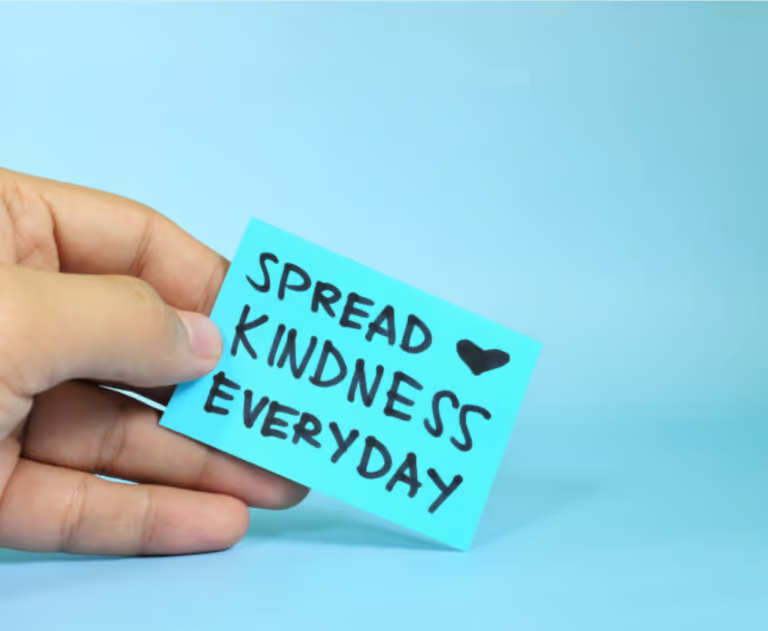
In many workplaces, targets, efficiency, and performance dominate the conversation, while kindness is often seen as optional, a nice-to-have rather than a necessity. Across Australia, rising burnout, declining engagement, and high turnover are forcing leaders to rethink what makes a workplace truly sustainable.
Today’s employees want more than a pay cheque. They’re looking for psychological safety, a sense of belonging, and workplaces that actively support their wellbeing. Kindness is quickly becoming a cornerstone of strong workplace cultures, influencing team collaboration, leadership approaches, and whether employees choose to stay and grow, boosting employee engagement in the process.
Work isn’t just a place we go each day, it’s where we spend around 1,645 to 1,713 hours per year. The culture we experience has a powerful impact on our mental health, motivation, and overall workplace wellbeing. When workplaces are inclusive and positive, employees feel safer, more confident, and more willing to show up as themselves, enhancing team morale building across departments.
A study by The American Psychological Association, “Paying It Forward: Generalized Reciprocity and the Limits of Generosity”, found that recipients of kindness not only return the gesture to the person who helped them but often “pay it forward” to others, amplifying positive behaviours across the workplace.
Understanding why kindness belongs in workplace culture and how it can be intentionally encouraged is now a leadership priority, not a luxury. Rather than being a soft or sentimental ideal, kindness functions as a practical force in the workplace. It builds trust, strengthens relationships and creates the conditions in which people are more likely to contribute, innovate and stay, driving employee engagement, supporting workplace wellbeing, and improving team morale building.
The State of Workplace Culture in Australia
If you asked Australian employees how they’re feeling at work, you’d get varied answers. The 2024 Ipsos report “What Australia Thinks, Feels, and Does at Work” suggests 72% feel their workplace culture is positive, yet a Gartner HR survey on “Australian Views on Workplace Culture” found only 26.2% truly feel their organisation’s culture is healthy.
SEEK’s Workplace Happiness Index shows that only 57% of workers are happy at work. For younger generations, the “daily grind” contributes to burnout, disengagement, and the rise of “quiet quitting.”
Leadership perception is another key factor shaping positive workplace culture. According to the 2023 State of Workplace Empathy Report, 30% of workers believe their leaders are out of touch and among Gen Z that sentiment is even stronger with 61% saying their CEOs lack empathy.
Interestingly, small acts of kindness may offer a surprising antidote to workplace stress. A survey conducted by the Random Acts of Kindness Foundation found that half of participants reported feeling stronger, more energetic, and calmer after helping others. Many also noted improvements in mood, reduced feelings of depression, and increased self-worth, suggesting that fostering empathy and kindness can have tangible benefits for employees’ wellbeing and workplace culture.
Why Kindness Matters in the Workplace
1. Builds Psychological Safety and Trust
Kindness creates an environment where employees feel safe to be themselves, ask questions, and share ideas without fear of judgment. When people feel valued as individuals, they are more likely to take risks, collaborate openly, and innovate, supporting employee engagement and team morale building.
According to the National Library of Medicine, “Organizational Best Practices Supporting Mental Health in the Workplace” research positive workplace culture directly supports mental health, reduces stress, and fosters trust between colleagues and leaders. A workplace grounded in kindness make employees feel good and cultivates a foundation of psychological safety that drives performance, creativity, and workplace wellbeing.
2. Strengthens Engagement and Belonging
Employees who feel connected to their colleagues and the broader organisation are more engaged and motivated. According to Randstad’s Workmonitor report, 83% of Australian workers perform better when they feel a sense of belonging, while 62% might leave if that connection is missing.
Acts of appreciation, support, and recognition make employees feel seen and valued. This helps in improving their day-to-day motivation, creates a sense of purpose and meaning in work, driving long-term engagement and loyalty.
3. Enhances Wellbeing and Reduces Burnout
Small gestures of kindness from a manager’s genuine appreciation to a colleague offering help can have measurable impacts on wellbeing. Kindness triggers the release of oxytocin, a hormone associated with trust, empathy, and connection. This “warm glow” reduces stress and strengthens bonds between team members, helping prevent burnout and fostering resilience.
In workplaces where kindness is embedded into everyday interactions, employees are more likely to experience satisfaction and balance, even in high-pressure environments.
4. Supports Retention and Drives Business Outcomes
A culture of kindness doesn’t just improve morale, it drives tangible business results. Employees who feel genuinely supported are more likely to stay with their employer, contribute creatively, and perform at higher levels.
In the long run, organisations can benefit from reduced recruitment and training costs when turnover declines.
5. Kindness Is Strategic, Not Just “Nice”
Kindness is increasingly recognised as a critical workplace competency. According to JobSeekers, “Good Jobs of the Future: Redefining what workers want”, survey 77% of job seekers prioritise kindness and mental health support, while 89% view kindness as a key factor when evaluating potential employers.
Far from being a “soft” perk, kindness is now a standard for competitive workplaces. Teams that practice kindness and support each other create environments employees don’t want to leave. In fact, talented workers often remain in roles long after they’ve outgrown them, simply because their workplace culture is positive, inclusive, and empowering.
How to Encourage Kindness at Work
1. Lead by Example
Leadership sets the tone for positive workplace culture. When managers actively listen, show empathy, and recognise employees publicly, it signals that kindness is valued. This can be as simple as creating a shout-outs channel on collaboration platforms, investing in employee recognition software, or dedicating time in meetings to celebrate team achievements.
Leaders can also model kindness by checking in regularly with team members, offering support during challenging projects, or acknowledging personal milestones such as birthdays or work anniversaries. In hybrid workplaces, where in-person interaction is limited, these actions can help maintain strong connections, reduce turnover, boost motivation, and lower stress levels.
2. Practice Active Listening
Listening is one of the most powerful ways to demonstrate kindness. Taking the time to truly understand a colleague’s perspective, validate their contributions, and respond thoughtfully builds trust and respect.
Active listening helps create a supportive environment where employees feel heard and valued, strengthening both relationships and collaboration.
3. Provide Kindness Training and Education
Even employees with the best intentions may not always know how to express kindness professionally. Offering training programs on empathy, active listening, giving and receiving feedback, emotional intelligence, and resolving conflicts with compassion can help equip employees with the tools to practice kindness consistently, supporting employee engagement and workplace wellbeing.
Workshops, online courses, or external experts can provide practical strategies and help embed kindness into daily interactions.
4. Create Opportunities for Acts of Kindness
Kindness is more impactful when it is intentional. Workplaces can encourage purposeful acts of kindness through initiatives such as “Random Acts of Kindness” weeks, peer-to-peer recognition systems, or team-building activities centered around kindness.
Simple gestures like hosting a morning tea, welcoming new colleagues with guidance or lunch, sending handwritten appreciation cards, sharing treats, or respecting meeting schedules can boost morale, empathy, and social connection while reducing stress.
5. Embrace Diversity
Recognising and celebrating diverse backgrounds, perspectives, and experiences in the workplace drives collaboration and innovation. When employees feel their unique perspectives are valued, they are more likely to contribute ideas and solutions that enrich the workplace.
For example, celebrating cultural events, encouraging diverse hiring practices, and creating employee resource groups can help foster a sense of inclusion. Encouraging open dialogue through workshops, discussion panels, or mentorship programs allows employees to learn from one another and develop empathy.
6. Design Spaces for Connection
Creating physical and virtual spaces that encourage meaningful interaction is key to building strong relationships and trust among employees. In the workplace, this could include shared lunch areas, collaborative workspaces, or casual lounge zones where people can connect informally.
For remote or hybrid teams, virtual spaces like regular video check-ins, online coffee chats, or team-building games help maintain personal connections despite physical distance. Social activities, such as monthly team lunches or wellness programs can provide opportunities for employees to bond and strengthen workplace culture.
Kindness is no longer optional in Australian workplaces, it’s essential to building a positive workplace culture, enhancing employee engagement, improving workplace wellbeing, and driving team morale building.
Organisations that intentionally embed kindness in their culture see stronger relationships, higher retention, and better business outcomes. By prioritising empathy, recognition, and support, leaders create workplaces where employees thrive, innovate, and choose to stay.