

Creating an enriching environment where young learners can grow, explore, and build foundational skills requires more than good intentions—it requires thoughtful planning.
A well-equipped centre for early childhood education and care (ECEC) shouldn’t only rely on large quantities of educational toys for toddlers and other materials, but also on choosing items that genuinely support development, independence, and engagement.
The Importance of Early Learning
All children grow and develop at their own pace. Some reach early milestones quickly, while others take longer. What matters is that the early years form a period of rapid brain development.
By the age of three, around 80% of a child’s brain development is complete, reaching 90% by age five. During this time, children are building the neural connections needed for motivation, communication, emotional regulation, problem solving, self-esteem, and social understanding. This development is influenced significantly by the environment they interact with. Materials, play experiences, routines, and relationships all shape the architecture of the developing brain.
For children under eight, guided play (that is, structured exploration with clear learning goals) is more effective than direct instruction when teaching academic concepts. Children absorb information best when learning is embedded within hands-on, meaningful, and enjoyable experiences.
The supplies provided in early learning settings should therefore support a balance between child-led exploration and intentional teaching, aligning with the goals of frameworks such as the Early Years Learning Framework (EYLF).
Educational Toys for Toddlers
Educational toys for toddlers aged 1–3 are more than a source of entertainment; they introduce children to concepts like cause and effect, spatial understanding, problem solving, and early numeracy through active exploration. These foundational materials include:
Blocks and Construction Toys
Wooden blocks, shapes, interlocking bricks, and construction sets strengthen fine motor control, hand-eye coordination, and spatial awareness. When toddlers stack or build, they test balance, compare sizes, and experiment with basic physics principles.
Puzzles and Shape Sorters
Simple puzzles teach persistence, focus, and matching skills. Shape sorters support visual-spatial thinking and encourage repeated trial and error, a critical part of early problem solving.
Counting Tools and Sorting Activities
Materials such as counting stackers, easy board games, or numbered mats turn abstract mathematical ideas into concrete experiences. Research shows that early numeracy improves when children use tactile materials, especially in linear counting or grouping activities.
Sensory and Movement Toys
Sensory toys such as soft balls or textured rings support exploration for younger toddlers, whilst simple musical instruments like shakers introduce rhythm without overwhelming young minds. Push-pull toys promote gross motor development, which is ideal for active play.
Exploring different materials encourages autonomy and helps educators design experiences that match developmental needs while still allowing plenty of room for children’s independent discovery.
Sensory Activities for Preschoolers
Preschool-aged children respond especially well to activities that involve sensory exploration. When children engage multiple senses, i.e., touch, sound, sight, and movement, they form stronger neural connections and retain information more effectively.
Here are some materials and sensory activities for preschoolers:
Tactile Play Materials
Preschool-aged children benefit from a wide range of tactile experiences, such as non-toxic modelling clay, kinetic or sensory sand, and sensory bins. These play-centred activities help with language development through descriptive play, collaboration, and imagination.
Art Materials as Sensory Tools
Art supplies support both creativity and sensory development. When children paint, draw with pencils, or sculpt, they’re not simply making art: they’re developing fine motor skills and cognitive control systems that underscore all future learning.
Select art materials with intention. Jumbo crayons and coloured pencils suit developing hand grips, whilst washable paints, thick brushes, and non-toxic materials ensure safety during exploration. Even simple tools like stickers serve multiple educational purposes, from reward systems to sorting activities and fine motor practice.
These tools also play a role in developing executive functions such as planning, decision-making, collaboration, and self-expression.
Creating Safe and Functional Learning Environments
Physical space profoundly influences a young student’s learning outcomes. In selecting furniture for early learning centres, school administrators must consider child-appropriate sizing, durability, safety, and functionality.
Here’s a handy checklist of the quality requirements and other features for early learning furniture.
Quality and Features | What to Look For | Why It Matters |
Safety Certification | Meets Australian standards for strength, durability, and stability | |
Child-Appropriate Sizing | Tables 46 cm–53 cm height, chairs 26 cm–31 cm seat height | Tables and chairs scaled to allow feet flat on the floor and elbows at 90 degrees when seated |
Rounded Edges | Smooth corners, no sharp edges | Prevents injury during active play |
Durability | Commercial-grade materials, reinforced joints | Should withstand daily use; reduces replacement costs |
Stability and Weight | Sturdy construction that won’t tip easily | Should be heavy enough to be stable, but light enough for educators to rearrange |
Easy to Clean | Non-porous surfaces, wipeable finishes | Maintains hygiene standards, quick sanitation |
Accessibility | Low shelving (30 cm–90 cm in height) | Promotes independence and self-directed learning |
Ergonomic Design | Supportive seating, adjustable options | Reduces physical strain, supports well-being |
Non-Toxic Materials | Compliant with Australian safety standards | Finishes and materials should be free from harmful chemicals |
Essential Furniture for ECEC Centres
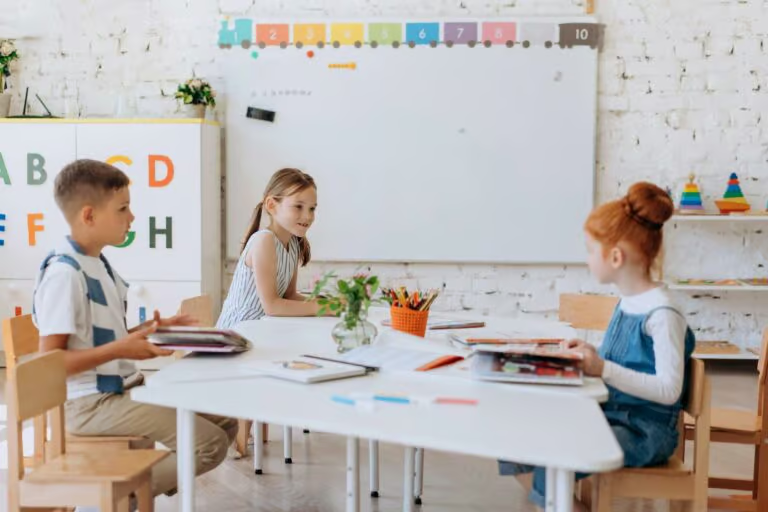
School furniture forms the physical structure of the early learning environment. When furniture fits children properly, they can focus on learning in comfort. Well-designed pieces help children move, collaborate, rest, and access learning materials independently.
- Child-Sized Tables and Chairs
Appropriately scaled furniture supports good posture, reduces fatigue, and allows children to focus on learning tasks rather than struggling to sit comfortably. Rounded edges and sturdy frames ensure safety during active play.
- Flexible and Collaborative Furniture
Modern learning spaces benefit from furniture that can be rearranged for group work, independent activities, or quiet corners. Tables and seating options, such as quadrant tables, ottomans, arc-shaped seats, and soft seating, give educators the flexibility to adjust the room layout as needed.
Ergonomic, agile furniture promotes technology use, movement, and participation. Research indicates that collaborative setups can improve classroom participation by up to 48%, making these pieces practical for centres that want to make their learning environments more dynamic.
- Storage and Organisation
Having accessible storage solutions promotes independence and maintains orderliness in the classroom. Low, easy-to-reach storage units allow children to find and return materials on their own, encouraging responsibility and strengthening early organisational skills.
A mobile teacher’s station can also complement child-accessible areas. It provides educators with a central place to store planning tools, resources, and materials that require supervision, while still allowing flexibility to move between activity zones. Keeping teacher-only items separate from children’s storage also helps maintain safety and organisation.
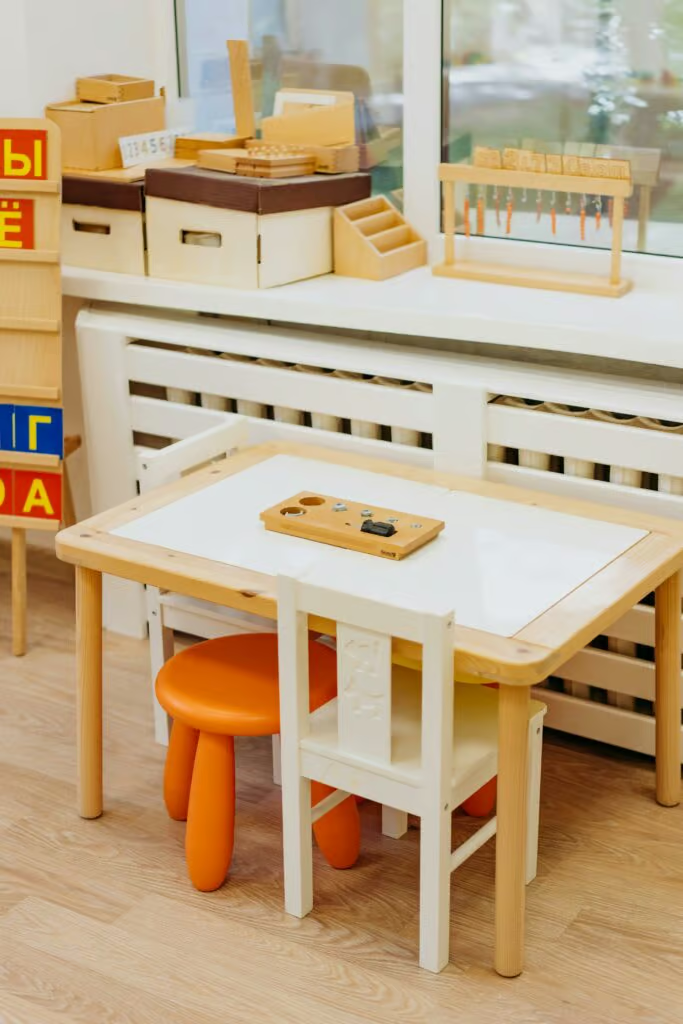
Nursery School Supplies: The Everyday Essentials
Everyday supplies keep early learning centres running smoothly. These items may seem mundane, but they’re crucial for maintaining the consistent, well-organised environment that young children need.
Art and craft materials such as crayons, washable paints, glue, safety scissors, and recycled paper form the backbone of daily activities. These materials give children a range of ways to express ideas.
Health and hygiene supplies, including wipes, tissues, hand soap, insect repellent, and basic first-aid kits, help centres meet safety requirements under Australian childcare laws.
For outdoor routines, personal items like labelled water bottles, hats for UV protection, and sunscreen are indispensable in Australia’s climate. These small necessities support wellbeing and help children participate comfortably in outdoor play.
Making Informed Choices
When selecting supplies for an early learning centre, prioritise durability, safety, and versatility. High-quality materials withstand daily use and offer better long-term value, especially when they support multiple types of play and learning. Thoughtful planning ensures that every item, from furniture to art supplies, contributes to a consistent, developmentally supportive environment.
Play is central to how young children build social, cognitive, and emotional skills. Every choice influences how children explore, communicate, and make sense of the world. By choosing materials that encourage independence, creativity, and curiosity, ECEC centres can create spaces that genuinely support healthy development during the most important learning years.