

For many workplaces, pencils are still an everyday essential. They are used in warehouses, classrooms, site offices, procurement teams, meeting rooms and shared workstations because they are simple, erasable and reliable. When organisations review their stationery mix, the choice is often framed as a small purchasing decision rather than an opportunity to improve consistency, reduce waste and make ordering easier.
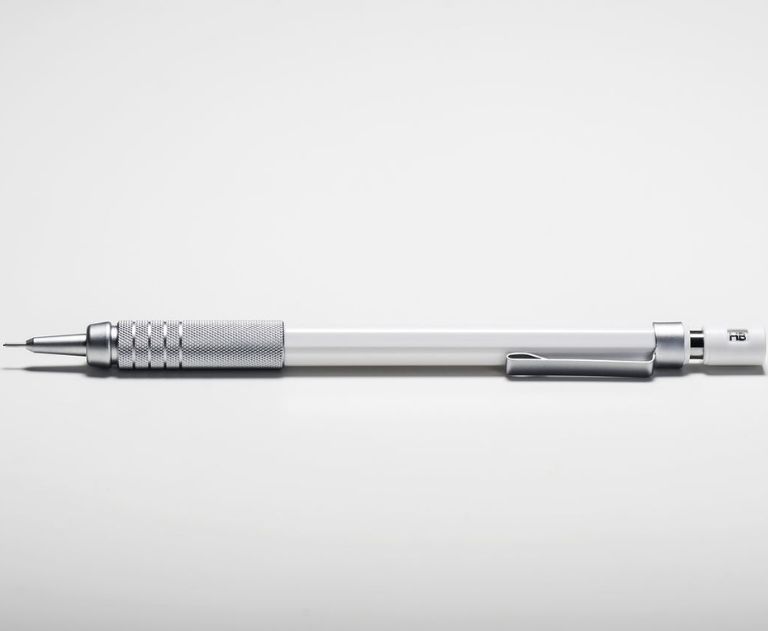
A good mechanical pencil keeps a consistent point, does not need sharpening and can be refilled instead of replaced.
Mechanical pencils support everyday productivity
The everyday value of a mechanical pencil is its reliability. Instead of stopping to sharpen a wooden pencil, mechanical pencils can keep writing with a simple click.
A study published in Psychological Science found that students who took notes by hand performed better on conceptual questions than those who typed notes, because handwriting encouraged processing and summarising rather than transcription. While the study was conducted in an education setting, the principle is relevant to workplace note taking; writing by hand can help people slow down, prioritise and capture what matters.
Mechanical pencils remove common friction points in note taking. The line width stays consistent, the point is always sharp, and any errors can be quickly erased. For teams that still rely on paper-based workflows alongside digital systems, that practicality is the main reason mechanical pencils remain a smart everyday writing choice.
A better fit for procurement teams
From a procurement perspective, stationery is not just about unit price. It is about availability, standardisation, ease of replenishment and how often products need to be replaced. A wooden pencil may appear simple, but it also needs sharpeners, creates shavings and becomes shorter with use. A mechanical pencil uses replaceable lead refills and can remain in service for much longer when used responsibly.
For businesses buying at scale, this can simplify stock control. Procurement teams can standardise on a common barrel type, lead size and refill, then replenish refills rather than constantly replacing full pencils.
Reduced waste through refillable use
Sustainability is rarely decided by one product swap, but small consumables can add up when purchased in volume. The National Waste and Resource Recovery Report 2024 reported that Australia generated 76 million tonnes of waste in 2022 to 2023, with 58% recovered and 42% sent to disposal. The report also identified paper and cardboard as one of the major material streams in national waste reporting. These figures show why businesses are looking more closely at everyday purchasing choices, including products that can be reused, refilled or recycled more easily.
Mechanical pencils are not automatically more sustainable in every case. Their environmental impact depends on the materials used, how long the pencil is kept, whether refills are used efficiently and how the product is disposed of at end of life. That said, the refillable design gives them a practical advantage over single use or frequently replaced stationery items. The longer a mechanical pencil stays in use, the better its replacement profile can become.
Consistent writing quality for shared workplaces
Consistency is another major benefit. Wooden pencils gradually change as they are used. They become shorter, the point dulls and the writing experience depends on how recently they were sharpened. Mechanical pencils keep the same length, balance, and grip for most of their usable life. That makes them especially useful in shared work areas, front counters, training rooms and classrooms where tools are used by many people.
Lead size also helps teams standardise around the right use case. A 0.5 mm lead can suit fine writing and precise notes, while 0.7 mm is often a practical everyday option because it balances line clarity with durability. For education, administration, warehousing and general office tasks, that balance can help reduce breakage while still giving users a clean, readable line.
Cost control is about total use, not just purchase price
When comparing pencils, the cheapest item on the shelf is not always the best value. A useful procurement comparison looks at how long the product lasts, whether it needs accessories, how often it is replaced and whether users prefer it. Mechanical pencils can reduce the need for sharpeners and may reduce whole pencil replacement if barrels remain in circulation.
Choosing the right mechanical pencil for business use
For business purchasing, the best mechanical pencil is the one that suits the task and is easy to replenish. Procurement teams should look for a comfortable grip, durable barrel, reliable lead advance mechanism, accessible refills and packaging that aligns with internal waste preferences. A built-in eraser and pocket clip are also useful for everyday portability.
It is also worth setting a standard lead size. Too many variations can create avoidable complexity, particularly across schools, offices or operational sites. A common 0.7 mm lead can cover many general writing tasks, making it easier to order refills and reduce mismatched stock.
Why mechanical pencils work well for students
For students, mechanical pencils offer a simple advantage in the classroom: they are ready to use whenever writing starts. There is no need to sharpen them or deal with broken or blunt points during lessons.
They also help students keep their work neat and consistent. Because the lead stays the same width, handwriting can remain clearer across a full page of notes, diagrams or calculations. This is especially useful for subjects such as mathematics, science and design, where students often need to write small numbers, draw lines, label diagrams or make quick corrections.
From a practical school supplies perspective, mechanical pencils are also easy to maintain. One pencil can be used for a long time with refill leads, reducing the need to replace full pencils as often. When students have a reliable pencil that writes smoothly, stays sharp and can be refilled, it becomes a useful everyday tool for learning.
The smarter everyday choice
Mechanical pencils are a smarter everyday writing choice as they combine convenience, consistency and a long lifespan thanks to refills. Mechanical pencils can keep writing without sharpening and offer procurement teams a more standardised consumable and support a practical approach to reducing unnecessary replacement.