


What if every purchase your organisation made could create a positive impact beyond the workplace?
From the paper in your printer to the notebooks on your desks and the filing products that keep your business organised, every item has a story behind it. The choices made during procurement don’t just affect budgets, they influence supply chains, communities, and the environment.
Today, organisations are looking beyond price to make purchasing decisions that support sustainability, ethical suppliers, and positive social outcomes. Government departments, businesses, and educational institutions are recognising procurement as a powerful tool for driving environmental, social, and economic change.
By choosing products such as recycled paper, reusable stationery, FSC® certified and Fairtrade-certified products, along with other sustainable workplace essentials, organisations can create meaningful impact without compromising on quality, performance, or value.
Why Ethical Purchasing Matters
Every purchase tells a story from the people who source raw materials, to those who manufacture the product, its journey to market, and its eventual use and disposal. Ethical purchasing recognises these impacts by considering social, environmental, and economic factors rather than focusing solely on cost and convenience.
The Australian consumer landscape is shifting towards more ethical consumption. Research by South Pole, a global climate consultancy, shows that 76% of Australians consider sustainability when shopping, with sustainability also influencing banking decisions (63%) and employment choices (57%). Younger consumers aged 18-34 are even more willing to pay a premium for sustainable products and services.
Around 42% of Australians are willing to pay more for ethically produced products, while 40% support recyclable packaging and 38% favour products made from recycled materials.
As expectations from customers, employees, investors, and regulators continue to grow, ethical procurement has become essential to building trust, strengthening reputation, and advancing ESG objectives. At every stage of the supply chain, organisations can create positive impact by prioritising fair labour practices, worker safety, responsible sourcing, and environmental stewardship.
Understanding Ethical Sourcing
Ethical sourcing ensures products are obtained from suppliers that operate in a socially and environmentally responsible way. It considers the origin of raw materials, treatment of workers, and the environmental impact of production, going beyond the product itself to assess the practices of the organisations behind it.
For procurement teams, ethical sourcing means evaluating supplier commitments to fair wages, safe working conditions, prevention of modern slavery, environmental management, and supply chain transparency. Suppliers that demonstrate accountability and traceability are better positioned to support an organisation’s sustainability goals.
By integrating ethical sourcing criteria into procurement decisions, organisations can use their purchasing power to promote responsible practices, encourage supplier improvement, and drive positive change across global supply chains.
1. Look for Fairtrade Certified Products
Fairtrade certification supports both ethical labour practices and environmental sustainability. It promotes fair wages, safe working conditions, sustainable farming methods, reduced pesticide use, and responsible management of natural resources.
Globally, Fairtrade represents more than 1,900 certified producer organisations across 70 countries, supporting over 1.9 million farmers and workers, with a strong focus on empowering small-scale producers and advancing gender equality.
In Australia and New Zealand, demand for Fairtrade products continues to grow, with thousands of certified products available across categories such as coffee, tea, sugar, chocolate, and office supplies. Fairtrade sales generate community premiums that help fund projects supporting producer communities.
For organisations, choosing Fairtrade-certified products is a practical way to align procurement decisions with sustainability goals, support responsible supply chains, and contribute to global initiatives such as the UN Sustainable Development Goals, including poverty reduction, decent work, and responsible consumption.
2. Start with Your Most Frequently Purchased Products
A simple way to begin responsible purchasing is by focusing on the products your organisation buys most often. High-volume items often represent the greatest opportunity to reduce environmental impact because even small changes can produce significant results over time.
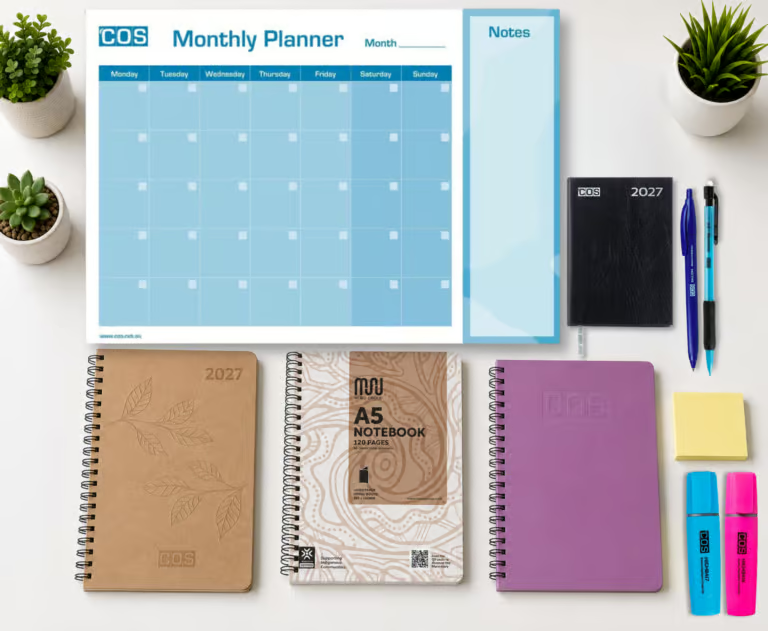
Everyday essentials such as paper, notebooks, pens, packaging, and cleaning supplies are a great place to start. Reviewing these categories can reveal opportunities to switch to more sustainable alternatives without disrupting existing workflows. For instance, replacing standard paper with recycled paper or choosing refillable pens instead of disposable ones can significantly reduce waste while maintaining the same level of functionality.
3. Choose Recycled Paper Wherever Possible
Paper remains one of the most commonly used products in offices, schools, and government workplaces. Although many organisations are embracing digital processes, paper continues to play an essential role in printing, documentation, record keeping, and communication.
Choosing recycled paper reduces demand for virgin timber, supports the recycling industry, and can help lower energy and water use compared with producing paper from new fibres. It also helps divert paper waste from landfill.
With advances in manufacturing, recycled paper now delivers excellent print quality and reliability for everyday workplace use. Making recycled paper the default choice is a simple way for organisations to reduce environmental impact with minimal change.
4. Look for FSC® Certified Products
FSC® certified products provide a responsible choice for sustainable procurement. The Forest Stewardship Council (FSC®) certification ensures materials come from responsibly managed forests that protect biodiversity, support local communities, and promote long-term environmental sustainability.
Choosing FSC® certified products helps organisations reduce the risk of sourcing from illegal logging or harmful forestry practices while improving supply chain transparency through traceability to responsible sources.
Common workplace products such as paper, notebooks, diaries, filing products, packaging, and educational materials are available with FSC® certification. Incorporating FSC® certified products into procurement policies demonstrates a commitment to responsible sourcing and sustainable resource management.
5. Invest in Reusable Stationery
Many workplaces rely on stationery items that are quickly discarded once they run out, contributing to unnecessary waste. Choosing reusable alternatives helps extend product life, reduce consumption, and create more sustainable workplace habits.
Refillable pens, mechanical pencils, reusable notebooks, and durable storage solutions are designed to be used again and again. Instead of replacing an entire product, users can simply refill, repair, or maintain it, reducing waste while making better use of resources.
While some products may have a higher upfront cost, their extended lifespan can reduce replacement expenses over time. By encouraging the use of reusable options, organisations can support sustainability goals while building a culture of mindful and responsible consumption.
6. Consider Product Lifecycles
Responsible purchasing is about looking beyond the price tag and understanding the full impact of a product from creation to disposal. Considering the entire lifecycle helps organisations make choices that deliver better environmental and economic value over time.
A product’s lifecycle includes everything from raw material sourcing and manufacturing to transportation, everyday use, maintenance, and end-of-life management. While cheaper products may seem cost-effective initially, they can create higher costs through frequent replacement, increased waste, or greater resource use. Products designed for durability, repairability, and longer use often provide better value in the long run.
By considering lifecycle impacts, organisations can make purchasing decisions that balance cost, quality, and sustainability while reducing waste and supporting responsible resource use.
7. Reduce Packaging Waste
Packaging plays an important role in protecting products, but excessive and unnecessary packaging can contribute to avoidable waste and increased environmental impacts. By making more sustainable purchasing decisions, organisations can reduce the materials they consume while supporting more efficient use of resources.
Choosing suppliers that offer recyclable, recycled, or minimal packaging options is a simple yet effective way to reduce waste. Organisations can also explore bulk purchasing, reusable packaging solutions, and supplier take-back programs to minimise packaging throughout the supply chain.
By embracing innovative alternatives such as shipping boxes, ecomailers, hex wrap & kraft ecopaper, and kraft tape, kraft paper and honeycomb roll, eco labels, and shipping & kraft tags provide practical ways to replace traditional packaging materials with more sustainable options. By adopting these solutions, businesses can meet growing expectations for environmentally responsible practices while helping protect the planet for future generations.
By considering packaging as part of every purchasing decision, organisations can reduce landfill waste, lower disposal costs, and create a more sustainable workplace. Small changes, when adopted consistently across everyday procurement activities, can make a significant and lasting impact.
8. Evaluate Supplier Sustainability Credentials
Choosing sustainable products starts with choosing responsible suppliers. A supplier’s environmental and ethical practices play a key role in the overall impact of the products they provide.
When assessing suppliers, organisations should look beyond price and consider sustainability commitments, including environmental management systems, ethical sourcing policies, sustainability reporting, and recognised certifications. Suppliers that openly share their goals and progress demonstrate a commitment to transparency and continuous improvement.
Partnering with responsible suppliers helps organisations strengthen their sustainability efforts, reduce supply chain risks, and encourage innovation in more sustainable products and services. Building these relationships creates long-term value for both the business and the environment.
9. Building a More Responsible Workplace
Creating a more sustainable workplace does not require dramatic changes overnight. Instead, it involves making thoughtful, informed purchasing decisions that gradually improve social and environmental outcomes. By prioritising ethical sourcing, sustainable buying practices, recycled paper, reusable stationery, FSC-certified products, and other sustainable office essentials, organisations can make a measurable difference through their everyday procurement activities.
Every purchase is an opportunity to support positive change. The products organisations choose influence suppliers, shape markets, and encourage better environmental and social practices across the supply chain.
By making sustainability a part of everyday procurement, businesses can reduce waste, support responsible suppliers, and help create a future where workplaces, communities, and the planet can thrive together.