

Indigenous Literacy Day is a national celebration held on the first Wednesday of September, created by the Indigenous Literacy Foundation to recognise First Nations stories, cultures and languages. In 2026, it falls on Wednesday 2 September, with the theme Country Is Our Teacher, reflecting the deep connection between land, language and learning in First Nations knowledge systems.
While the day itself is already a valuable prompt, genuine support for Indigenous literacy needs to be built into books on the shelf, resources in the classroom, and everyday choices schools and workplaces make throughout the year.
Why Indigenous Literacy Deserves Year-Round Attention
For First Nations communities, storytelling carries history, law, and connection to Country across generations. Supporting Indigenous literacy means recognising that Aboriginal and Torres Strait Islander stories are not just a supplementary unit to be covered once a year. They are core content that belongs in classrooms, libraries and staffrooms consistently.
For schools, this means Aboriginal-authored books sitting on the same shelves as any other title, read for their storytelling as much as their cultural significance. For workplaces, it means recognising that literacy and language preservation is an ongoing area worth genuine, sustained support rather than a single donation drive in September.
Building a Collection of Indigenous-Authored Books
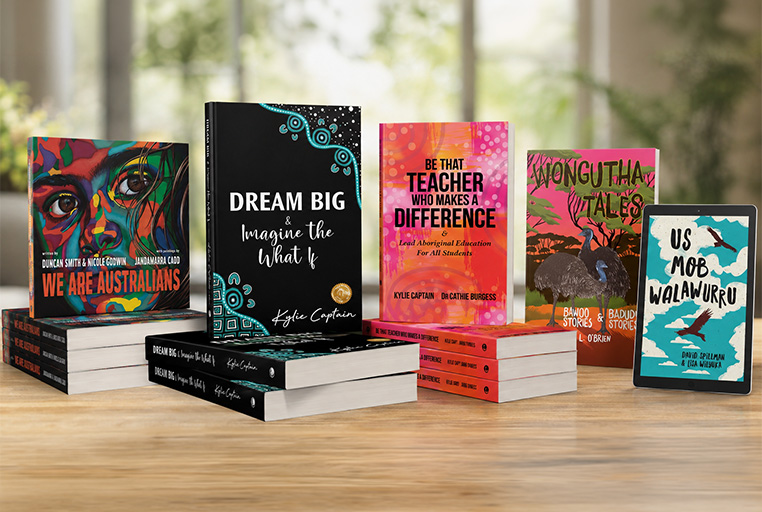
The starting point for most schools and many workplaces is the bookshelf. A genuinely inclusive reading collection includes First Nations authors and illustrators, across all genres and reading levels, not confined to a dedicated shelf that only gets attention around Indigenous Literacy Day or NAIDOC Week.
Education books that include First Nations perspectives support both literacy development and cultural understanding at the same time. Look for titles published in partnership with Aboriginal and Torres Strait Islander communities, and prioritise books written and illustrated by First Nations creators over those that depict First Nations culture without that direct authorship. Some titles worth building into a permanent collection include:
- Us Mob, Walawurru, a collaboration between Luritja woman Lisa Wilyuka and David Spillman that follows a young Aboriginal girl growing up on a Central Australian cattle station in the 1960s, offering middle-years readers genuine insight into cultural difference and connection to Country
- Wongutha Tales by May L. O’Brien, a bilingual collection of traditional Wongutha teaching stories alongside memoir stories from the author’s own childhood, ideal for younger primary readers
- We Are Australians, co-authored by Wiradjuri man Duncan Smith OAM and Nicole Godwin, a picture book exploring what it means to be an Australian citizen through First Nations perspectives on connection to Country
- Be That Teacher Who Makes a Difference by Gamilaroi educator Kylie Captain and Associate Professor Cathie Burgess, a valuable staffroom resource for teachers wanting to embed Aboriginal education authentically across the curriculum
- Dream Big and Imagine the What If, Kylie Captain’s own memoir of resilience, culture and connection to Country, suited to staff professional reading or senior secondary students
Riley Callie Resources, founded by Dunghutti woman Deborah Hoger, creates classroom resources including Aboriginal symbol cards that bring authentic Indigenous perspectives into everyday classroom learning, spanning literacy, STEM and cultural understanding. These resources work well precisely because they are designed for regular classroom use rather than as occasional, standalone activities.
Storytelling as a Literacy Practice
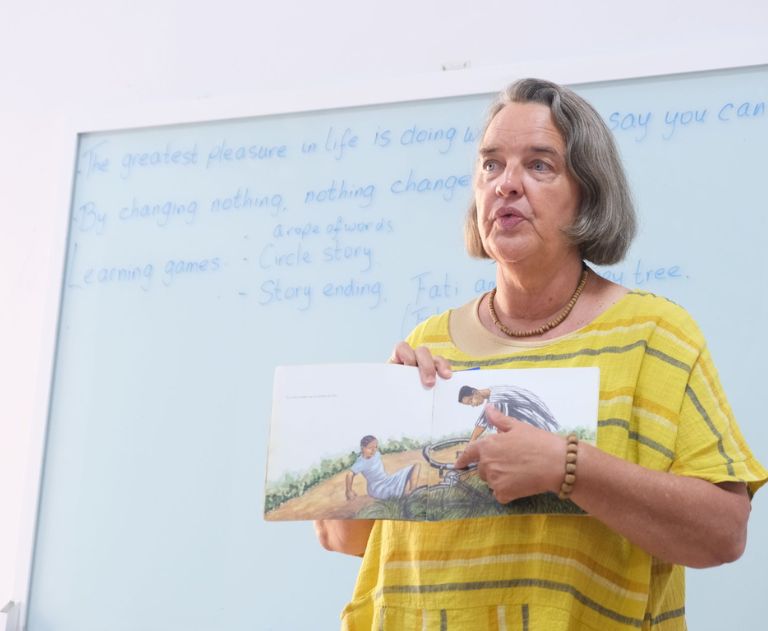
Oral storytelling sits at the heart of First Nations culture and offers a genuinely different literacy practice from reading a printed page. Building storytelling into classroom or workplace learning recognises that knowledge is shared through voice, place and relationship as much as through text.
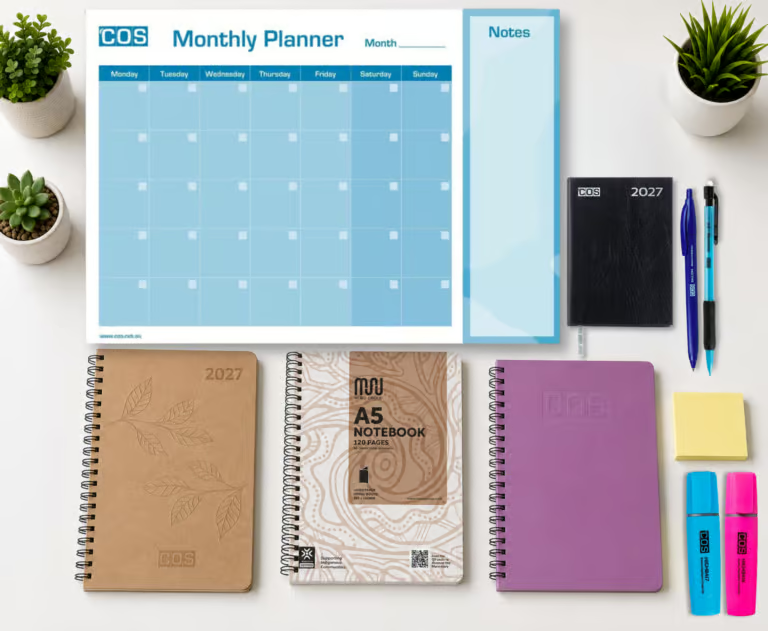
Practical ways to bring storytelling practice into a classroom or team environment include inviting local elders or community members to share stories where respectful protocols are followed, dedicating time for students or staff to retell stories in their own words, and using notebooks for reflection journals recording what a story taught about Country, community or connection.
Handmade educational resources from Marara Designs, a 100% First Nations owned business founded by Wiradjuri woman Shelby-Rae, bring authentic storytelling and cultural learning into physical classroom tools, designed specifically to support genuine cultural learning rather than generic decoration.
Culturally Inclusive Classroom Supplies
Beyond books, a culturally inclusive classroom reflects First Nations perspectives in its everyday materials and displays. Display stands and display books allow schools to showcase First Nations artwork and student work responding to Indigenous texts, keeping them visible rather than packed away after a single unit of work.
Washi tape featuring contemporary Australian Indigenous designs, created by Ngunnawal artist Jo Wilson, brings authentic First Nations art into everyday classroom materials, from labelling to craft activities. For reading corners or cultural learning stations, clear labels help maintain organised, dedicated spaces for these resources rather than letting them disappear into general classroom storage.
Workplace Support for Indigenous Literacy
For workplaces, meaningful support for Indigenous literacy goes beyond a one-off donation. Ongoing, structured commitment makes a genuine difference to remote communities where access to culturally relevant books remains limited.
Workplace giving programs that direct a small percentage of payroll toward literacy foundations create sustained funding rather than one-off contributions. Businesses can also purchase books for staff libraries or client gifting from Indigenous-owned publishers, and support First Nations-owned suppliers as a standing procurement practice rather than a single seasonal gesture.
In addition to classroom resources, Deadly Ed, founded by First Nations educators Kane Wright and Josh Brown, delivers authentic learning experiences and professional development that workplaces and schools can draw on to build genuine cultural competency among staff.
Practical Ideas for Any Setting
Whether in a classroom or a workplace, some approaches translate well across both settings:
Read widely and often. Include Aboriginal and Torres Strait Islander authors in regular reading rotations and book clubs.
Support Country-based learning. Connect literacy activities to place. Read stories set on local Country, learn the traditional name for the land a school or workplace sits on, or reflect in writing on what students or staff have learned from the natural world.
Buy from First Nations-owned businesses. Every purchase from a genuinely First Nations-owned supplier is a direct, practical form of support that extends well beyond a single day of recognition.
Keep resources visible and used. Store Indigenous literacy materials with clear signage and dedicated display space, rather than reserving them for one unit of work each year.
A Foundation, not a Single Day
Indigenous Literacy Day gives schools and workplaces a valuable moment to focus attention and take stock. However, the most meaningful outcomes are what happens in the fifty-one weeks around it. The books that stay on the shelf, the stories that get told regularly, and the everyday decisions that treat First Nations literacy and culture as a genuine, ongoing priority rather than an annual observance.
Indigenous Literacy Day reminds us that learning from First Nations knowledge is not a single lesson. It is a continuous practice, built one book, one story and one respectful choice at a time.