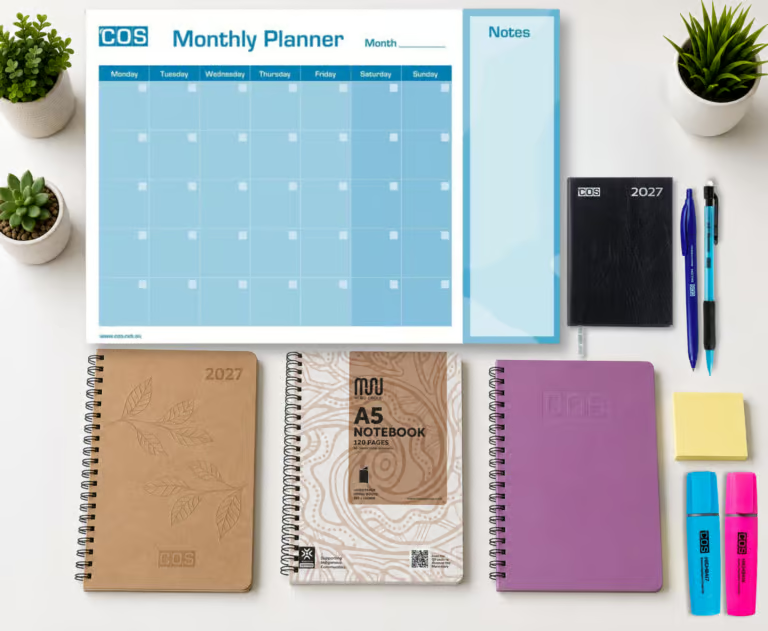



Improving an office does not always require construction, new floorplans or a full fitout. In many workplaces, the quickest gains come from targeted updates that reduce clutter, improve comfort, support privacy and make every day work easier. With 36% of employed Australians usually working from home, many teams now need office spaces that support shared desks, hybrid attendance and fast transitions between focused work and collaboration.
A practical improvement plan starts with the accessories and workstation tools people use every day. Desk organisers, document trays, office dividers, monitor risers, ergonomic chairs, footrests, office trolleys and noticeboards can make a visible difference without major disruption. Here are 10 product-led ways to improve your office without a full renovation.
1. Start with a clean desk system
A clean desk is more than a visual upgrade. It helps employees find what they need faster, reduces distractions and creates a more professional impression for clients and visitors. Start with simple workplace accessories such as desk accessories, pencil cups, cable tidies, desk pads and small storage trays. Assign each item a clear purpose, such as daily tools, incoming paperwork, outgoing paperwork and personal items.
2. Use desk organisers to reduce visual clutter
Desk organisers are one of the easiest ways to improve individual workstations. Choose modular desk accessories that separate pens, sticky notes, clips, small devices and frequently used stationery. For hot desks, use compact organisers that can be moved or packed away quickly. For permanent desks, choose larger units with compartments for writing tools, notebooks and reference materials. This supports a clean desk culture without relying on employees to remember where everything belongs.
3. Add document trays for faster paper workflow
Paper still moves through many offices, especially in finance, HR, education, healthcare and operations teams. Document trays help stop forms, invoices and approvals from piling up across desks. Use stacked trays for urgent, review, file and archive stages. This makes paper-based work more visible and supports faster handovers between team members.
4. Improve posture with monitor risers
Poor screen height can contribute to awkward neck and shoulder positions. A monitor or laptop riser is a low-cost way to lift screens closer to eye level while freeing space beneath the monitor for notebooks, keyboards or small stationery items. This is especially useful for shared workstations where employees may adjust chairs differently. The Australian Institute of Health and Safety (AIHS) notes that work-related musculoskeletal injuries are a rising problem, while Safe Work NSW reports that Australian workers spend approximately 76% of their work time sitting. Workstation accessories that promote better posture should therefore be part of any office improvement plan.
5. Upgrade seating before replacing desks
If the budget only allows one ergonomic improvement, start with chairs. An ergonomic chair with adjustable seat height, lumbar support and armrests can help different users set up safely across permanent and shared desks. Pair chairs with clear workstation setup guidance so employees know how to adjust them.
6. Use footrests to support shorter users and shared desks
Footrests are often overlooked, but they can be important in shared work environments. When a chair is adjusted to suit desk height, some users may not be able to place their feet flat on the floor. A footrest can provide a stable base, support posture and reduce pressure behind the legs. Keep several adjustable footrests available in hot desk zones, training rooms and reception areas.
7. Create privacy with office dividers and desk partitions
Open offices can encourage collaboration, but they can also make focused work difficult. Office dividers and desk partition panels help create visual separation without building walls. Use partitions between desks where employees handle calls, confidential information or detailed tasks. Mobile dividers can also be used to separate project areas, create temporary meeting zones or reduce distractions in busy departments.
8. Add office trolleys for flexible storage
An office trolley can instantly improve shared storage. Use trolleys for stationery, printer supplies, catering items, meeting kits or project materials that move between teams. This is particularly useful for hybrid spaces where desks need to stay clear and supplies need to be accessible. Label each shelf or tub so items are returned to the right place after use.
9. Use noticeboards to make work visible
Noticeboards and whiteboards help teams share priorities, rosters, safety reminders, campaign timelines and visitor information without relying only on email or chat. They are especially useful in reception areas, warehouses, staff kitchens and shared project spaces. Search for noticeboards and stationery supplies that suit the size and purpose of each area.
10. Build cleaning and reset points into the office
A clean desk policy works best when the office provides the right tools. Place cleaning wipes, recycling bins, waste bins, and other cleaning supplies near where they are needed. Create reset points in shared areas so employees can quickly clear meeting tables, return stationery and remove used catering supplies. This keeps the office ready for the next team and supports better hygiene throughout the day.
Quick buying checklist for office improvement accessories
- Choose desk organisers that match how people actually work.
- Use document trays to separate incoming, active and completed paperwork.
- Select monitor risers that suit screen size and desk depth.
- Prioritise ergonomic chairs and footrests for shared workstations.
- Add office dividers where employees need focus or privacy.
- Use office trolleys for mobile supplies, project materials and meeting kits.
- Place noticeboards in high-traffic areas for visible communication.
- Support clean desk habits with accessible storage, bins and cleaning supplies.
Small changes can improve the whole workplace
You do not need a full renovation to create a more functional, comfortable and organised office. By combining ergonomic products, smart storage, office accessories and visual organisation tools, workplaces can improve focus, workflow and day-to-day usability with minimal disruption. Start with the areas that cause the most friction, such as cluttered desks, poor screen height, limited privacy or shared supplies. Then use practical product solutions to make the space easier to use, easier to maintain and better suited to modern work.