

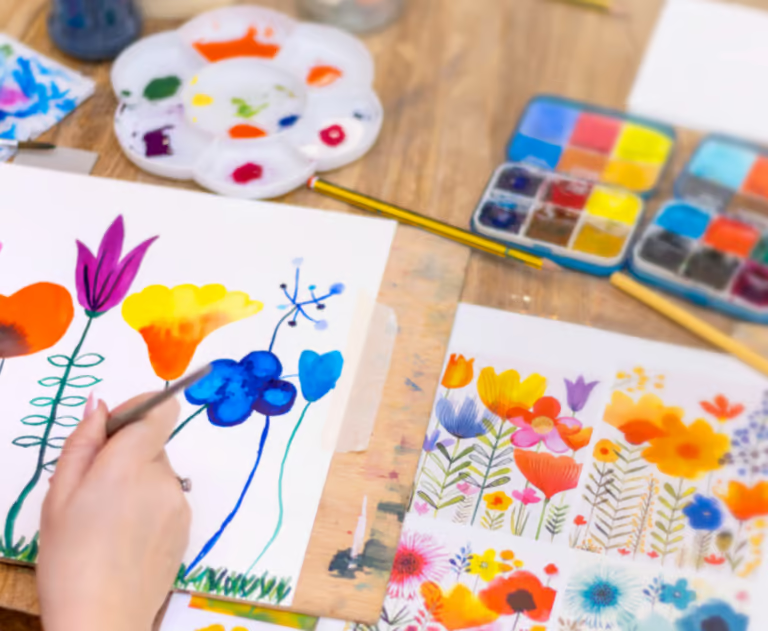
Ever looked at a beautiful painting and wondered how a few simple brushes, paints, and a splash of water can create something so striking? Whether you’re introducing students to art, exploring a new hobby, or building your professional toolkit, watercolour painting is one of the most accessible and rewarding ways to bring creativity to life.
From developing fine motor skills in early learners to encouraging creative expression in secondary classrooms and professional studios, watercolours offer endless opportunities for artistic exploration.
Creativity is already a big part of everyday life in Australia. According to Creative Australia’s National Arts Participation Survey (2022), 97% of Australians engage with the arts in some way, while 44% actively create art themselves. The survey also found that 84% believe the arts have a positive impact on individuals and communities, reinforcing the important role creative activities play in learning, wellbeing, and self-expression.
Whether you’re setting up a school art room, stocking a creative studio, or simply picking up a paintbrush for the first time, having the right watercolour supplies makes the experience more enjoyable and rewarding.
With the right tools on hand, artists of every age and skill level can enjoy the freedom, fun, and endless possibilities that watercolour painting has to offer.
Understanding Different Types of Paint
Watercolour Paints
Watercolour paints are created by combining finely ground pigments with a water-soluble binder, typically gum arabic, allowing colours to flow, blend, and layer beautifully on paper. Their transparent nature makes them ideal for creating soft washes, delicate gradients, and luminous effects.
Available in tubes, pans, liquid concentrates, and classroom paint blocks, watercolours are suitable for everyone from beginners to professional artists. They are commonly used for techniques such as wet-on-wet, glazing, dry brushing, and colour layering, making them a favourite for landscapes, botanical illustrations, portraits, still life, and abstract artworks. Watercolour paints are easy to clean up and require minimal equipment; making them one of the most popular paint choices for schools.
Acrylic Paint
Acrylic paint is a versatile, water-based paint known for its rich pigmentation, fast drying time, and exceptional durability. Made from pigment suspended in an acrylic polymer emulsion, it dries to a permanent, water-resistant finish that adheres well to a wide range of surfaces, including canvas, paper, wood, cardboard, ceramics, and fabric.
Unlike oil paints, acrylics dry quickly, allowing artists to build layers in a short period of time. They can be diluted with water for a watercolour-like effect or applied thickly to create textured, expressive brushstrokes. Acrylic paints durability makes them an excellent choice for classroom murals, mixed media artwork, decorative crafts, and long-lasting creative projects.
Craft Paint
Craft paint, also known as poster paint or student paint, is an affordable, water-based option designed for schools, children’s activities, and hobby projects. It has a thinner consistency than acrylic paint and is available in a wide variety of bright colours, making it ideal for introducing young artists to colour mixing and painting techniques.
Craft paint is commonly used on paper, cardboard, wood, papier-mâché, and other porous surfaces for posters, school displays, DIY decorations, and seasonal crafts. While it provides excellent coverage for educational projects, it is generally less durable than acrylic paint and is best suited to indoor or temporary artwork.
Oil Paint
Oil paint is a traditional artist’s medium valued for its rich colour, smooth texture, and extended drying time. It is made by mixing finely ground pigments with drying oils such as linseed oil, allowing artists to blend colours seamlessly and create subtle transitions that are difficult to achieve with faster-drying paints.
Because oil paint remains workable for hours or even days, it is ideal for detailed portraits, landscapes, and fine art. It produces a beautiful depth of colour and can be built up in multiple layers to create texture and dimension. While oil paintings are exceptionally durable when properly cared for, they require specialised solvents for cleaning and longer drying times than other paint types.
Washable Paint
Washable paint is specifically formulated for young children and early learning environments. It is designed to wash easily from skin, clothing, tables, and most classroom surfaces, making it a practical choice for kindergartens, childcare centres, and primary schools.
Available in a wide range of vibrant colours, washable paint encourages creative exploration while giving educators and parents peace of mind during messy art activities.
Glitter Paint
Glitter paint combines colourful pigments with shimmering glitter particles to add sparkle and dimension to artwork. It is a popular choice for seasonal crafts, greeting cards, posters, decorations, and school art projects where extra visual impact is desired.
The metallic and pearl paint range delivers smooth coverage with luminous, reflective finishes that add depth and shine to student artwork.
Available in a wide range of colours and sizes, these paints work on paper, cardboard, wood, and other craft surfaces, making them a versatile choice for festive, seasonal, and everyday creative work.
Fluorescent Paint
Fluoro paint, also known as fluorescent paint, features highly vibrant colours that appear especially bright under natural light and can glow under UV or black light. Its bold appearance makes it ideal for posters, displays, event decorations, science projects, and eye-catching classroom artwork.
Fluorescent colours encourage experimentation with contrast and design, making them popular for creative educational activities and visual presentations.
Face and Body Paint
Face and body paint is specially formulated to be gentle on skin while providing vibrant, highly pigmented colours. It is widely used for school performances, drama productions, sporting events, community festivals, book week celebrations, and imaginative play.
Quality face paints are dermatologically tested, easy to apply with brushes or sponges, and wash off easily with soap and water, making them suitable for both children and adults.
Fabric Paint
Fabric paint allows artists and students to personalise textiles with long-lasting colour while maintaining the flexibility and softness of the material. It is specially formulated to bond with fibres, making it suitable for decorating t-shirts, tote bags, canvas shoes, aprons, pencil cases, costumes, banners, and other fabric projects.
Once heat-set or cured according to the manufacturer’s instructions, fabric paint becomes durable and washable, making it ideal for classroom textile projects, fundraising activities, personalised gifts, and creative fashion design.
aints vary in how they adhere to surfaces, reflect light, and the effects they produce. Each type has unique qualities that shape its performance and final result.
Understanding these differences helps you choose the right medium for your creative goals. With the right knowledge, you can explore new techniques, experiment confidently, and express your creativity more freely, learn more about it in Everything You Need to Know About Paints.
Essential Watercolour Paint Supplies
Paint Sets
Every watercolour starter kit begins with a quality paint set. A good beginner’s set includes a range of colours, making it easy to experiment with colour mixing, shading, and blending without buying individual paints.
Watercolour paints come in tubes, pans, discs, and liquid concentrates, each suited to different needs. Tube paints offer rich pigmentation for larger artworks, while pan and disc sets are portable, easy to store, and ideal for classrooms and artists on the go.
For schools, classroom packs provide excellent value by supplying enough paint for multiple students. Junior watercolour disc sets are especially popular for younger learners, as they’re durable, easy to clean, and designed for regular classroom use.
Choosing the Right Palette
A palette is essential for mixing colours and creating custom shades. Watercolour palettes typically include multiple wells for separating colours and larger areas for blending.
Beginners benefit from palettes with clearly defined mixing spaces, while studios often require larger palettes to accommodate more complex projects.
Watercolour Brushes
The right brushes are just as important as the paint itself. Different brush shapes and sizes produce different effects, allowing artists to create everything from intricate details to broad washes of colour.
A well-rounded starter kit should include:
- Round brushes for fine details, outlines, and controlled strokes.
- Flat brushes for large washes, backgrounds, and straight edges.
- Fine liner or detail brushes for intricate illustrations and finishing touches.
- Foam brushes for applying paint over large areas, creating interesting textures, and introducing younger students to painting techniques.
Brushes are available with both natural and synthetic bristles. Synthetic brushes are often preferred for classrooms because they are durable, affordable, easy to clean, and perform exceptionally well with watercolour paints.
Watercolour Paper
Not all paper is suitable for watercolour painting. Watercolour paper is specially designed to absorb water without warping or tearing.
High-quality watercolour paper supports colour layering, blending, and detailed techniques. Schools and beginners should look for paper with sufficient weight to withstand repeated washes and corrections.
Watercolour paper is available in pads, sheets, and sketchbooks, making it suitable for classroom activities, studio projects, and personal artwork.
Water Pots and Water Trays
Water pots are essential for rinsing brushes and maintaining clean colours. Every watercolour workstation should include at least one water pot, while larger studios may benefit from multiple containers.
Water trays provide convenient storage for water, brushes, and painting tools. They help keep workspaces organised and reduce spills during art activities.
Canvas and Easels
Although watercolour paper is the traditional surface for watercolour painting, artists often enjoy experimenting with other materials.
Canvas panels and specially prepared canvases allow artists to explore mixed-media techniques and create display-worthy artwork.
Easels provide stability and an ideal working angle for painting. Tabletop easels can be used for small works or tight spaces and standing easels are ideal for larger canvases with adjustable heights and angles.
Paint Pumps
Paint pumps are a simple but essential addition to busy classrooms and art studios. They dispense poster, acrylic, and washable paints in controlled amounts, reducing waste, minimising mess, and making cleanup easier.
Ideal for group art activities, paint pumps help keep workstations organised while ensuring students and artists have quick, consistent access to paint.
Foam Brushes
Foam brushes are versatile tools that allow artists to create smooth backgrounds, textures, patterns, and decorative effects.
They are particularly useful in early learning environments where students are developing fine motor skills. Foam brushes are also ideal for applying glue, varnishes, and broad colour washes.
Paint Stampers
Paint stampers are a fun and engaging way to introduce young artists to patterns, textures, and creative design.
Available in a variety of shapes and themes, they encourage imaginative play while helping children develop hand-eye coordination and fine motor skills. They’re also perfect for classroom projects, seasonal crafts, and collaborative artworks.
Drying Racks
No busy art room is complete without a drying rack. Designed to keep paintings safe while they dry, multi-tier drying racks prevent smudging, save valuable workspace, and make it easy to organise multiple projects at once.
Drying racks are an essential classroom tool for protecting finished artwork and keeping creative sessions running smoothly.
Storage Solutions
An organised art space makes creativity easier. Storage containers, caddies, tote trays, drawers, and mobile trolleys help keep paints, brushes, paper, and accessories neatly organised and within easy reach.
Portable storage solutions are especially useful in schools, allowing supplies to be moved effortlessly between classrooms while protecting materials and extending their lifespan.
Protective Clothing for Painting
Aprons
Painting can get messy but that’s part of the fun! Durable art aprons help protect clothing from paint spills, splashes, and other creative mishaps, allowing students and artists to focus on creating with confidence. Reusable and easy to clean, they’re a practical addition to classrooms, studios, and home art spaces.
Paint Smocks
For younger artists, paint smocks offer even greater protection. With their full-coverage design and comfortable fit, they help keep school uniforms and everyday clothing clean during painting, crafting, and sensory play.
A favourite in kindergartens and junior classrooms, paint smocks let children explore their creativity freely without worrying about the mess.