

Composting is a simple and exciting way to learn how nature recycles. Every day, we throw away food scraps such as fruit peels, vegetable pieces, and garden waste that can be transformed into something useful. Through composting, these materials break down naturally and become nutrient-rich soil that helps plants grow strong and healthy.
Learning about composting helps children understand the importance of reducing waste, caring for the environment, and making sustainable choices. These hands-on activities encourage curiosity and allow children to explore how everyday actions can make a positive difference for the planet.
To help children learn about the composting process, we have created two engaging worksheets that combine creativity, problem-solving, and environmental awareness.
1. Composting Foldout Worksheet
The Composting Foldout Worksheet guides children through the complete composting journey, from collecting food scraps to creating healthy compost for plants. This interactive activity helps children understand each step of the process in a fun and visual way.
Children will learn how fruit and vegetable scraps can be collected, added to a compost bin, and broken down with the help of worms and natural processes. They will discover that when compost becomes dark and crumbly, it is ready to use as a natural plant booster.
By cutting, colouring, and assembling the foldout, children can create their own composting guide while learning how compost supports healthy plant growth. This activity encourages creativity while building important environmental knowledge.
Materials Required:
- Printed Composting Foldout Worksheet
- Safety scissors
- Glue stick or PVA glue
- Pencil
- Coloured markers, pencil colours or crayons
Step-by-Step Instructions:
1. Read the Steps
Read each composting step carefully to understand how food scraps are turned into compost.
2. Identify the Items
Look at the cut-out items and decide where each one belongs in the composting process.
3. Cut Out the Items
Carefully cut out each item along the dotted lines.
4. Match the Items
Match each cut-out item to the correct composting step in the cycle.
5. Paste in Place
Paste each item into the correct section to complete the composting journey.
6. Complete the Compost Cycle
Check your completed activity and see how scraps become nutrient-rich compost that helps plants grow.
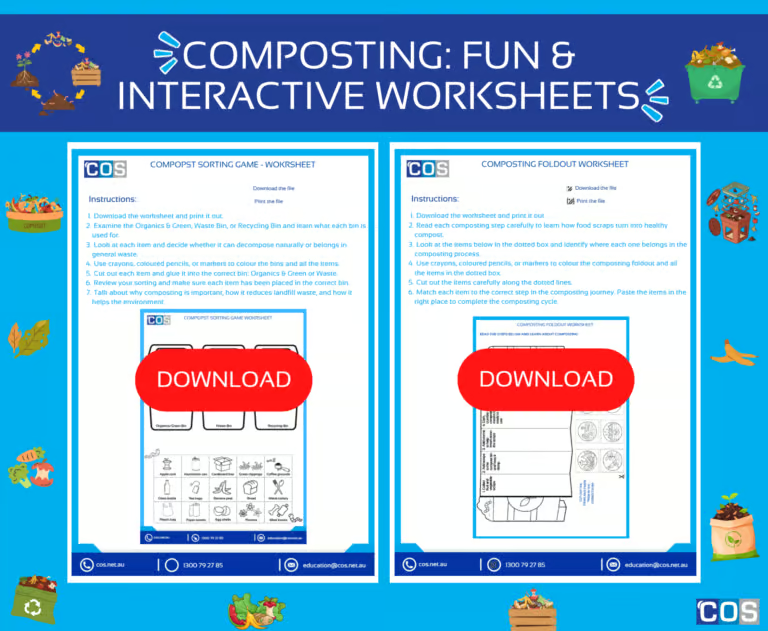
Click on the below images to download your free worksheet:


2. Compost Sorting Game Worksheet
Composting is a simple and environmentally friendly way to reduce waste and recycle organic materials. In this activity, students will learn to identify items that can be composted and those that belong in general waste.
The Compost Sorting Game Worksheet helps children learn which items belong in the compost bin and which items should go into general waste. Through sorting and matching activities, children develop an understanding of what materials can naturally break down and return nutrients to the earth.
Children will explore common household items such as fruit scraps, vegetable leftovers, and other waste materials. By deciding where each item belongs, they learn how correct waste separation can reduce landfill waste and support a healthier environment.
This fun sorting game turns learning about composting into an interactive challenge. It helps children build problem-solving skills while developing positive habits around recycling and waste reduction.
Materials Required:
- Printed Compost Sorting Game Worksheet
- Safety scissors
- Glue stick or PVA glue
- Pencil
- Coloured markers, pencil colours or crayons
Step-by-Step Instructions:
Step 1: Look at the Two Bins
Begin by examining the two bins shown on the worksheet. The bin labelled “Organics & Green” is for materials that can naturally break down and decompose, such as food scraps and garden waste. The bin labelled “Waste Bin” is for items that cannot be composted and should be disposed of in the general rubbish bin. The “Recycling Bin”” is for the items which can be recycled.
Step 2: Identify the Items
Next, look at all the items displayed at the bottom of the worksheet. These include items like an apple core, aluminium can, cardboard box, grass clippings, coffee grounds, and more. Carefully examine each item and think about whether it can decompose naturally.
Step 3: Colour the Bin & Items
Use crayons, markers, or pencil colours to colour each product and the 2 bins.
Step 4: Sort the Items into the Correct Bin
Carefully cut out each item along the dotted lines. Decide whether the item belongs in the Organics & Green bin or the Waste bin. Glue or stick each item into the correct bin.
Step 5: Check Your Answers
Review all the items you have sorted. Check that each item has been placed in the correct bin.
Step 6: Discuss What You Learned
Talk about the activity with your classmates, teacher, or family members. Discuss why composting is important. Share how composting helps reduce landfill waste. Explain how compost improves soil health and supports the environment.
Click on the below images to download your free worksheet:


Together, these worksheets provide an engaging way for children to discover the benefits of composting. By learning how food scraps can be reused, children can become little environmental champions and understand how small actions can help create a greener future.