

From well-stocked bathrooms to clean kitchens and shared facilities, many of the everyday essentials that keep a workplace running smoothly tend to go unnoticed, until something runs out.
A bathroom without toilet paper, an empty soap dispenser or a cleaning station missing essential consumables can quickly become more than a minor inconvenience. In kitchens and shared break areas, running out of paper towels, hand soap, bin liners or cleaning products can create hygiene concerns, disrupt daily routines and add extra work for staff. For employees, visitors, cleaning teams and facilities managers, these shortages can interrupt routines, create additional work and affect the overall experience of a workplace.
For corporate offices, government facilities, healthcare environments and other high-traffic workplaces, managing office supplies and bathroom supplies is therefore an important part of effective facilities management. With better planning, visibility and consistency, workplaces can stay ahead of demand, reduce last-minute shortages and keep their workplaces running smoothly, day after day.
A more considered approach to stock planning can help organisations maintain reliable supply, improve visibility, reduce unnecessary purchasing and make shared spaces easier to manage.
1. Start With a Complete Workplace Stock Audit
Before making changes to your procurement or replenishment process, take the time to understand exactly what your organisation is currently using. Walk through every bathroom, kitchen, meeting room, breakout area, reception space and other shared facility across your workplace or sites. Record the products currently being used, the dispensers they are compatible with, where supplies are stored, how frequently they are replenished and whether certain areas regularly experience shortages.
The audit should also consider how many people use each facility and whether usage varies significantly between locations. The purpose of the audit is not simply to count products, but to build a clear picture of what you have, where it is being used and how effectively it is being managed.
2. Match Supplies to How Each Space Is Used
Once you understand your current inventory, consider how each shared space is actually being used. Different facilities can have dramatically different consumption patterns, so applying the same stock strategy everywhere can result in unnecessary costs in some areas and shortages in others.
A small corporate office with limited occupancy will have very different requirements from a large government building, educational facility or healthcare site operating for extended hours. Visitor numbers, operating hours, employee density and the purpose of each area can all influence consumption. High-traffic bathrooms may require larger-capacity dispensers and more frequent servicing, while lower-use facilities may require less frequent attention without being overlooked entirely.
The same principle applies beyond bathrooms. Kitchens and break areas may require paper towels, dishwashing products, surface cleaners and bin liners, while meeting rooms and reception areas may require tissues, hand sanitiser and other visitor-facing essentials. Understanding the way each space operates allows facilities teams to allocate products according to actual demand rather than relying on assumptions or applying a blanket approach across the entire workplace.
3. Choose the Right Dispenser and Product System
Products should be considered alongside the dispensing systems they use. A cost-effective consumable may offer less overall value if it requires frequent refilling, is difficult to maintain or creates additional work for cleaning teams.
When selecting toilet paper, hand towel and soap dispensers, consider usage levels, capacity, ease of refilling and available storage. High-traffic facilities may benefit from higher-capacity systems that reduce replenishment, while smaller workplaces may be better suited to compact options.
Facilities teams should also regularly check that dispensers are clean, functional and easy to use. Leaking, blocked or damaged units can increase product waste and require additional maintenance.
Cleaning consumables, including bathroom and surface cleaners, disinfectants, wipes, sponges and bin liners, should form part of the same stock-management approach. Keeping these essentials readily available helps cleaning teams maintain hygienic shared spaces throughout the day.
4. Keep Kitchen and Breakroom Supplies Stocked
Kitchens and break areas are often overlooked when planning workplace consumables, but they can experience high levels of daily use. Employees and visitors rely on these spaces for everything from preparing drinks and meals to cleaning up after use, making consistent access to essential supplies an important part of workplace operations.
Include kitchen and breakroom products in the same stock-management process as bathroom and cleaning supplies. Depending on the workplace, this may include paper towels, dishwashing liquid, dishwasher tablets, sponges and wipes, cloths, surface cleaners, bin liners, paper towel/hand towel, disposable cups and cutlery and other commonly used consumables.
Consider usage levels, employee numbers, visitor traffic and how frequently the kitchen is used when setting minimum and maximum stock levels. High-use kitchens may require more frequent replenishment, while smaller break areas may need less frequent checks.
Keeping these supplies clearly organised and easy to access can also help reduce unnecessary purchasing and prevent staff from discovering that essential items have run out.
5. Establish Clear Stock Levels and Reorder Points
One of the simplest ways to improve stock management is to establish clear minimum and maximum stock levels. Rather than waiting until a cupboard looks empty before placing an order, determine how much of each essential product should be available and when it is time to reorder.
Minimum stock levels should reflect actual consumption and supplier lead times. If a workplace typically uses a certain amount of toilet paper or hand towels each week and deliveries take several days to arrive, there should be enough stock available to cover normal usage during that period. Adding a sensible safety-stock allowance can provide additional protection against unexpected increases in demand, delayed deliveries, special events or temporary changes in occupancy.
It is also important to establish maximum stock levels. Buying large quantities may appear economical when products are offered at favourable prices, but excessive inventory can quickly consume valuable storage space and tie up procurement budgets. A balanced approach ensures that essential supplies remain available without creating unnecessary surplus.
6. Organise Storage to Make Stock Management Easier
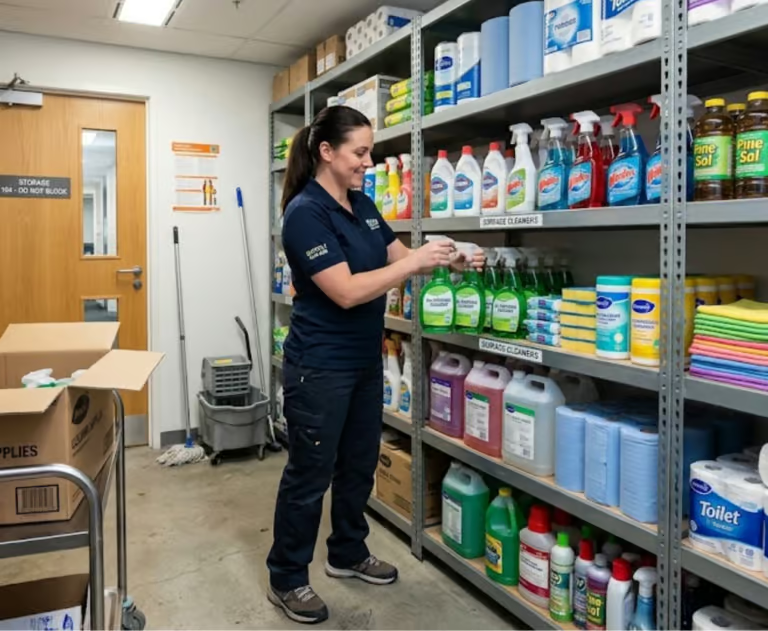
An effective procurement process can quickly become inefficient if the storeroom is poorly organised. When products are scattered across multiple shelves, stored in different locations or hidden behind unrelated cartons, it becomes difficult for staff to determine what is actually available. This can lead to unnecessary purchases, duplicate orders and wasted time searching for supplies.
Create clearly defined storage areas for bathroom consumables, cleaning products, waste-management supplies and other workplace essentials. Products such as toilet paper, hand towels and soap refills should be easy for cleaning teams to locate, while chemicals, wipes, sponges and other cleaning products should have their own designated areas.
Clear labelling can make stocktaking considerably easier and help staff identify products without having to open multiple cartons. Separating everyday stock from reserve supplies can also make it easier to understand what is immediately available and what is being held as backup. A well-organised storeroom should provide a clear view of inventory and make it easier for everyone involved to maintain consistent stock levels.
7. Use Consumption Data to Improve Procurement
Once a structured stock-management process is established, the next step is to use real consumption data to improve purchasing decisions. Tracking how frequently products are ordered and how quickly they are being used can provide valuable insight into the actual requirements of each site.
For example, if two workplaces have similar employee numbers but one consistently uses significantly more hand towels, there may be an underlying reason. The difference could be related to visitor numbers, occupancy patterns, dispenser configuration, product wastage or simply higher usage. Understanding these differences can help facilities teams make more informed decisions rather than automatically increasing orders.
Consumption data can also reveal seasonal trends and changes associated with workplace events, changes in staffing or variations in building occupancy. Over time, this information can make forecasting more accurate and help procurement teams determine appropriate order quantities and delivery schedules. Instead of estimating what might be required, purchasing decisions can be based on evidence from actual workplace usage.
8. Standardise Products Where It Makes Sense
Using too many different products across a workplace or multiple sites can make procurement, storage and stock management unnecessarily complicated. Where practical, organisations can consider standardising compatible toilet paper, hand towel, soap and dispenser systems to reduce the number of products that facilities teams need to manage.
Standardisation can make ordering simpler and improve visibility across locations. It can also make stocktaking easier and allow surplus products to be transferred between sites when required. Cleaning teams may also benefit from greater familiarity with consistent products and dispensing systems.
However, standardisation should not mean using exactly the same products everywhere regardless of the environment. A corporate office may have very different requirements from a healthcare facility, government building or high-traffic public site. The focus should instead be on removing unnecessary variation while ensuring products remain appropriate for their intended application.
Facilities Manager's Quick Checklist
A checklist like this takes only a few minutes to complete but can help create a much more consistent approach to shared-space management.
Bathroom Supplies
- Toilet paper is available in every cubicle
- Backup toilet paper is available where required
- Hand towel dispensers are adequately stocked
- Hand soap dispensers are filled
- Hand sanitiser is available where required
Dispensers and Equipment
- Toilet paper dispensers are functioning correctly
- Hand towel dispensers are dispensing correctly
- Soap dispensers are working properly
- Dispensers are clean and undamaged
- Taps and bathroom fixtures are functioning correctly
Cleaning and Hygiene
- High-touch surfaces have been cleaned
- Bathroom surfaces have been cleaned
- Cleaning chemicals and wipes are available
- Bins have been emptied
- Bin liners are adequately stocked
Kitchen & Breakroom Supplies
- ☐ Low-stock kitchen products have been identified
- ☐ Any recurring kitchen supply issues have been reported
- ☐ Paper towels are adequately stocked
- ☐ Dishwashing liquid or dishwasher supplies are available
- ☐ Sponges, cloths and cleaning products are available
- ☐ Bin liners are adequately stocked
- ☐ Tissues and other commonly used consumables are available
- ☐ Kitchen surfaces and shared areas have been cleaned
- ☐ Kitchen bins have been emptied
- ☐ Backup kitchen supplies are available where required
Stock Management
- Backup consumables are available
- Low-stock products have been identified
- Stock is stored neatly and safely
- Products are easy for cleaning teams to locate
- Replenishment requirements have been recorded
- Any recurring issues have been reported
Effective shared-space stock management is about more than keeping shelves full. It requires a clear understanding of how facilities are used, which products are needed, how quickly they are consumed and how efficiently they can be stored, replenished and maintained.
By starting with a workplace-wide audit, matching supplies to demand, choosing appropriate dispensing systems, establishing clear stock levels and using consumption data to guide procurement, facilities teams can create a more reliable and efficient approach to everyday supply management.
The result is a workplace where essential products are available when they are needed, cleaning teams can work efficiently and procurement decisions are based on actual requirements rather than guesswork.