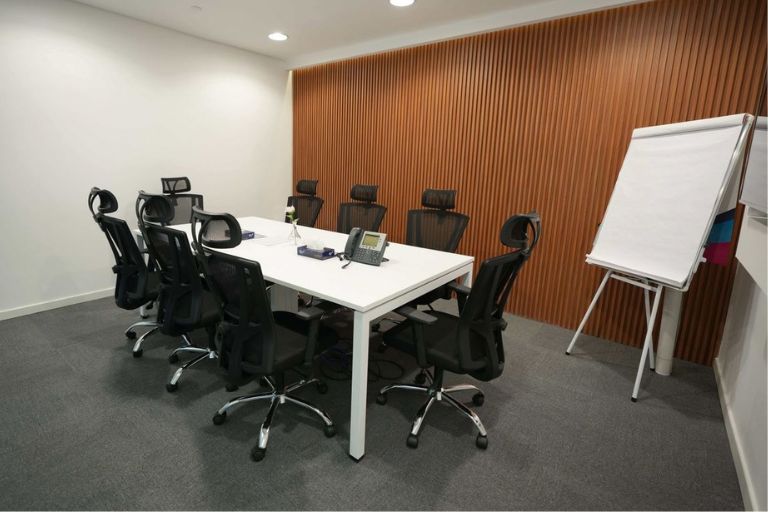



To run an effective conference you need six things in place before delegates arrive: a venue configured for the event format and expected attendance; AV and presentation infrastructure that works reliably for both in-room and remote participants; a complete stationery and materials pack for every delegate; catering and consumables planned for the full duration of the event; a registration and welcome process that minimises queue time and creates a strong first impression; and a staff or volunteer team briefed clearly on roles and responsibilities. An effective conference is not a large meeting. It is a managed experience, and the difference between an effective one and an underwhelming one is almost always in the preparation.
Australia’s business events industry generates $36 billion in direct economic benefit annually and employs an estimated 229,000 people, according to the Australian Business Events Association. The ABEA’s Domestic Forward Calendar 2026 confirms 806 domestic business events already secured from July 2026, spanning 3,031 event days and bringing over 451,000 delegates, with more than $1 billion in estimated delegate spend through 2033. Conferences, summits, congresses, and corporate events are not marginal activities for Australian organisations. They are a primary channel for professional development, industry connection, and organisational communication.
Yet the gap between a conference that achieves its objectives and one that falls short is rarely about the speaker lineup or the venue. It is about the operational detail: the delegate who cannot find a pen when a speaker says something worth writing down; the session that runs late because the AV setup took fifteen minutes to resolve; the afternoon that loses energy because catering ran out an hour early; the registration queue that creates a poor first impression before the opening address begins.
This article covers the six operational areas that determine whether a conference is effective, a complete conference supplies checklist, and the most common things that go wrong and how to prevent them.
6 Things You Need to Run an Effective Conference
1. A Venue Configured for the Event Format
The venue configuration determines what kinds of sessions the conference can run effectively. A theatre-style layout with all chairs facing a stage is suited to keynote addresses and panel sessions where audience interaction is limited. A cabaret layout with round tables and chairs facing a central stage or screen accommodates both presentations and table-based discussion. A workshop layout with cluster tables and working space supports interactive sessions and group activities.
Most multi-day conferences need more than one configuration across different sessions. Confirm the room configuration for each session type with the venue in advance, and clarify who is responsible for reconfiguring the room between sessions if the format changes through the day.
Key venue configuration questions to confirm before the event: What is the maximum seated capacity for each layout style? Is there a dedicated registration area separate from the main room? Where is the breakout space for networking and catering? What are the access times for bump-in and AV setup? Is there a green room or speaker preparation area?
2. AV and Presentation Infrastructure That Works
Nothing undermines confidence in a conference faster than an AV failure at the start of a keynote session. For delegates who have paid to attend or travelled to be there, a session that begins with ten minutes of technical troubleshooting signals that the organisational detail has not been managed.
A reliable conference AV setup requires: a display system sized for the room and the expected audience visibility distance; a microphone system appropriate for the session format (lapel for roaming presenters, lectern for fixed, handheld for audience Q and A); a clear, tested connection process for presenter laptops and devices including HDMI, USB-C, and DisplayPort adapters; a backup display option in case the primary screen fails; and a dedicated AV technician present for the duration of the event.
For conferences with hybrid participation, where some delegates are attending remotely, the AV requirements expand significantly. The camera must capture the room and the speaker clearly; the audio must pick up both the presenter and audience questions without feedback; the streaming platform must be tested in the venue on the venue’s internet connection, not on a home connection, before the event day.
AV preparation tip: Run a full AV test in the venue at least one day before the event, not on the morning of. Test every connection type your speakers will use. Prepare a printed one-page AV quick-start guide for each presenter so they can connect independently if needed.
3. Delegate Stationery and Materials
Every delegate at a conference needs the physical tools to participate fully: somewhere to write, something to write with, and the event materials that orient them through the program. These are not premium extras. They are the baseline operational requirement for a professional event.
A complete delegate stationery and materials pack typically includes:
- A conference notepad of at least A5 size, ideally branded or at minimum professionally presented
- A quality pen or ballpoint not a bulk promotional pen that skips; delegates notice the difference
- A program or agenda printed and clearly laid out, with session times, speaker names, and room locations
- A name badge with the delegate’s name in a font large enough to read at conversational distance
- A lanyard or badge holder that keeps the badge visible without being cumbersome
- Any workshop materials handouts, worksheets, or reference cards relevant to interactive sessions
- A satchel or tote for multi-day conferences where delegates accumulate materials across sessions
For larger conferences, these items should be pre-assembled into delegate packs and ready at the registration desk before delegates arrive. Pre-assembly eliminates queue time at registration and ensures every delegate receives the same complete kit regardless of when they arrive.
COS conference supplies: COS supplies notepads, pens, name badges, lanyards, badge holders, satchels, and printed materials for conferences and corporate events across Australia. Bulk orders with consolidated invoicing through a COS business account simplify conference supply procurement significantly.
4. Catering and Consumables Planned for the Full Duration
Catering at a conference is not a peripheral concern. It is one of the primary points at which delegate experience is formed. A morning tea that runs out twenty minutes in, a lunch that does not account for dietary requirements, or an afternoon session with no refreshments sends a message about how well the event has been planned.
For catered conference sessions, the quantity planning should be based on confirmed delegate numbers plus a ten to fifteen percent buffer for higher-than-expected uptake at popular items. For conferences where the organiser is managing their own catering rather than using a venue catering service, the consumables required include: coffee and tea in sufficient volume for the full day; milk, sugar, and non-dairy alternatives; cups, glasses, plates, and napkins; serving equipment; bin liners and waste management for each catering break; and cleaning products for the catering area between sessions.
For multi-day conferences, a dedicated person should be responsible for monitoring catering levels across the day and communicating with the catering team or supply area before a break runs short rather than after.
COS catering consumables: COS supplies coffee, tea, cups, plates, napkins, serving equipment, and catering consumables for conferences and corporate events. A pre-event supply order through your COS business account can cover every catering consumable category in a single delivery.
5. A Registration and Welcome Process That Creates a Strong First Impression
The registration desk is the first point of contact between the delegate and the event. A well-run registration process creates a positive first impression that carries through the rest of the day. A poorly run one creates an early negative signal that is difficult to recover from, regardless of how well the sessions run.
An effective registration setup requires: pre-printed delegate badges organised alphabetically or by registration number for fast retrieval; a registration desk staffed by enough people to manage peak arrival volume without queuing (a ratio of one staff member per thirty delegates arriving in a twenty-minute window is a practical guide); a clear wayfinding sign visible from the venue entrance so delegates know where to go without having to ask; a brief welcome conversation that orients the delegate to the day before they enter the main room; and a separate queue or lane for late registrations or walk-ins so they do not slow down pre-registered delegate flow.
6. A Briefed Team with Clear Roles and Responsibilities
The operational quality of a conference is determined by the team running it as much as by the program itself. A team that has been clearly briefed on roles and responsibilities, knows who to escalate issues to, and has the authority to resolve minor problems without waiting for approval is the difference between an event that recovers quickly from the inevitable small failures and one that amplifies them.
For every conference, assign named responsibility for: registration and delegate welcome; AV and technical support; catering and consumables; room configuration and signage; speaker management and green room; and a floating coordinator who has the full picture and can redeploy where needed. Brief the whole team together at least thirty minutes before doors open so everyone understands the day’s program, the key contacts for each area, and the escalation path for any issue that cannot be resolved on the spot.
Conference Supplies and Preparation Checklist
Use this checklist when planning your conference supply order and event preparation.
Stationery and materials
Notepads (one per delegate plus 10% buffer); quality pens (one per delegate plus 10% buffer); printed programs and agendas; name badges pre-printed and sorted; lanyards and badge holders; workshop handouts or reference materials; satchels or totes for multi-day events.
Speaker and facilitator needs
Whiteboard markers (four colours) and eraser for each room; printed speaker notes copies as backup; laser pointer or presentation clicker; spare printed agendas for facilitators; highlighters and sticky notes for workshop facilitators.
Presentation and connectivity
HDMI, USB-C, and DisplayPort cables and adapters for all connection types; extension cords and power boards at presenter position; spare batteries for wireless microphones and clickers; AV technician confirmed for full duration.
Food and beverage support
Coffee, tea, and hot water in sufficient volume for all breaks; milk, sugar, and non-dairy alternatives; cups, glasses, plates, and napkins for peak break attendance; serving equipment; bin liners for catering area; cleaning products for surface wipe-down between breaks.
Welcome and wayfinding
Pre-sorted delegate badge packs; registration list printed and accessible; pens and highlighters for on-site amendments; spare blank badges for walk-ins; wayfinding signage from venue entrance to registration desk; welcome script for registration staff.
Cleaning and consumables
Cleaning products and surface wipes for room setup and between sessions; hand sanitiser at entry points and registration desk; bin liners for all waste bins in session rooms and catering areas; spare notepads and pens at back-of-room table for late arrivals.
Frequently Asked Questions
What do you need to run an effective conference?
To run an effective conference, you need six things in place before delegates arrive: a venue configured for the event format; reliable AV and presentation infrastructure; a complete stationery and materials pack for every delegate; catering and consumables planned for the full duration; a registration and welcome process that creates a strong first impression; and a briefed team with clear roles and responsibilities. The difference between an effective conference and an underwhelming one is almost always operational preparation.
What stationery does every conference delegate need?
Every conference delegate needs at minimum: a notepad of at least A5 size, a quality pen that writes reliably, a printed program or agenda, a name badge in a font large enough to read at conversational distance, and a lanyard or badge holder. For interactive sessions, additional items such as sticky notes, highlighters, and worksheet handouts may be needed. For multi-day conferences, a satchel or tote to carry materials across sessions is a practical addition. These items should be pre-assembled into delegate packs and ready at registration before delegates arrive.
How much catering should you order for a conference?
Base your catering quantity on confirmed delegate numbers plus a ten to fifteen percent buffer for higher-than-expected uptake at popular items. For self-managed catering, the consumables required include coffee, tea, milk and alternatives, cups, plates, napkins, serving equipment, bin liners, and cleaning products for each break. Assign a dedicated person to monitor catering levels across the day and communicate with the catering area before a break runs short. Running out of catering mid-event is one of the most avoidable conference problems and one of the most noticeable to delegates.
How big is Australia's business events industry?
The Australian business events industry generates $36 billion in direct economic benefit annually and employs an estimated 229,000 people, according to the Australian Business Events Association. The ABEA’s Domestic Forward Calendar 2026 confirms 806 domestic business events already secured from July 2026, bringing over 451,000 delegates and more than $1 billion in estimated delegate spend through 2033. The pipeline of confirmed international business events was up 16% year-on-year as of January 2025, with most organisers planning more events in 2025-26.
What are the most common things that go wrong at conferences?
The most common operational failures at Australian conferences are: AV setup taking too long or failing at the start of a session; catering running out before all delegates have been served; registration queues creating a poor first impression; delegate packs missing key items because they were not checked before assembly; and team members being unclear on their responsibilities when an issue arises. All of these are preventable with adequate preparation: a full AV test the day before, catering quantities buffered above delegate numbers, pre-assembled delegate packs verified before arrival, and a clear team briefing before doors open.
Can COS supply everything a conference needs?
Yes. COS supplies notepads, pens, name badges, lanyards, badge holders, satchels, printed materials, whiteboard markers, presentation accessories, AV cables and adapters, coffee, tea, catering consumables, cups, plates, napkins, cleaning products, hand sanitiser, and bin liners, all from a single business account with contracted pricing. COS is one of three suppliers on the Australian Government’s Whole of Government Stationery and Office Supplies Panel (Department of Finance, December 2024). A pre-event conference supply order through a COS business account covers every category in a single purchase order delivered to your venue.
From delegate notepads and name badges to catering consumables, AV accessories, and cleaning products, COS supplies everything your conference needs. One business account, one purchase order, delivered to your venue.