

Would your employees know where to find a first aid kit in an emergency? Could a visitor quickly locate evacuation procedures or emergency contacts if every second counted?
When an emergency occurs in the workplace, every second matters. Whether it is an injury, medical incident, fire alarm or evacuation, employees need to know where to find essential information and safety resources without wasting valuable time searching.
Many organisations focus on having the appropriate first aid supplies and emergency equipment available. However, simply having these resources is not enough. They must also be visible, clearly identified and easy to access.
Clear emergency signage, organised safety information and consistent communication can reduce confusion, support faster responses and help employees feel more confident about what to do. These practical measures can also contribute to a stronger, more proactive workplace safety culture.
Why Easy Access to Emergency Information Matters
Work-related injuries continue to affect Australian workplaces across a wide range of industries. According to Safe Work Australia’s Key Work Health and Safety Statistics Australia 2025, there were 146,700 serious workers’ compensation claims involving at least one week off work in 2023-24, equating to more than 400 serious claims every day. Tragically, 188 Australian workers lost their lives due to traumatic workplace injuries in 2024. These statistics highlight why accessible emergency information remains a critical component of workplace safety.
In an emergency, confusion can delay responses and increase risk. When emergency contacts, evacuation procedures and first aid locations are clearly visible, employees are better equipped to act quickly and appropriately. This simple step can significantly improve workplace preparedness and help organisations foster a more proactive approach to safety.
Here are some simple ways to improve the visibility and accessibility of your workplace safety information:
1. Display Emergency Procedures Where People Can See Them
Emergency procedures should not be hidden in a filing cabinet, buried in an employee handbook or available only through a digital system that may be difficult to access during an incident.
Display essential instructions in locations employees use regularly, such as:
- Break rooms and kitchens
- Reception and visitor areas
- Meeting and training rooms
- Warehouse and workshop entrances
- Staff noticeboards
- Near lifts, stairwells and designated exits
- Beside first aid stations and emergency equipment
Important information may include evacuation maps, emergency contacts, assembly points, first aid locations and incident-reporting instructions.
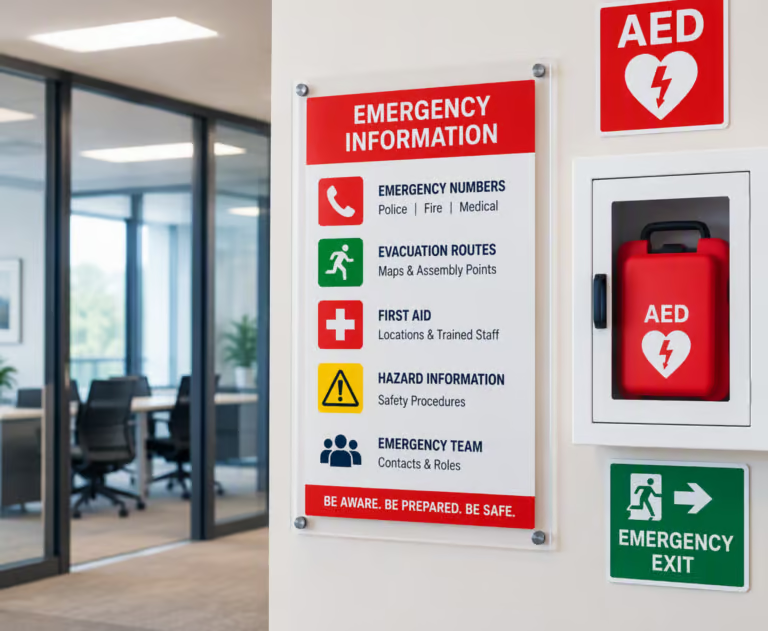
Dedicated poster frames and wall-mounted document holders can keep this information organised, protected and easy to read. They also make it simpler to replace materials when contact details, floor layouts or workplace procedures change.
Keep each display clear and uncluttered. Employees should be able to identify the most important information at a glance rather than having to scan a crowded noticeboard.
2. Make First Aid Supplies Easy to Locate
Having a workplace first aid kit is only effective if employees can locate it quickly when an incident occurs. In larger workplaces, where employees, visitors and contractors may be unfamiliar with their surroundings, clear and visible signage plays an important role in directing people to essential safety supplies.
Safety signs should be positioned in prominent locations such as entrances, walkways, common areas and near first aid stations to help people identify critical resources at a glance. Consistent signage throughout the workplace also creates familiarity, making it easier for individuals to respond confidently in an emergency.
By clearly marking the location of first aid kits, emergency equipment and key safety information, organisations can help reduce response times and improve overall workplace preparedness. Easy-to-follow directional and information signage supports a safer environment by ensuring help can be found quickly when it is needed most.
Improving first aid readiness in the workplace involves more than simply having a first aid kit on hand. From selecting the right first aid kit and maintaining appropriate stock levels to establishing clearly marked first aid stations and identifying trained first aiders, first aid should form an integral part of everyday workplace health and safety, rather than being considered only after an incident occurs.
3. Ensure Defibrillators Are Clearly Marked and Accessible
In some workplaces, an Automated External Defibrillator (AED) forms part of the site’s emergency response equipment. When a defibrillator is available, employees should be able to locate it quickly during a medical emergency.
Visibility is critical. A defibrillator that is stored out of sight or located in an unfamiliar area may be difficult to locate when time is important.
To improve accessibility, workplaces can:
- Use clear AED and emergency signage to identify defibrillator locations.
- Position signage in hallways, reception areas and common walkways.
- Ensure the device remains unobstructed and easy to access.
- Include AED locations on evacuation maps and safety noticeboards.
- Cover AED locations during employee inductions and refresher training.
Displaying clear information about the location of emergency equipment helps employees become familiar with available resources before they are needed.
4. Create a Central Safety Information Hub
A dedicated safety noticeboard can serve as the central location for emergency information and workplace safety communications.
Rather than scattering important documents across multiple locations, bring core information together in a clearly labelled safety hub. Depending on the workplace, this may include:
- Emergency contact information
- Evacuation maps and assembly points
- First aid officer and fire warden details
- Incident-reporting information
- Workplace safety checklists
- Training and refresher schedules
- Toolbox talk information
- Safety alerts and procedural updates
Use poster frames or document holders to organise the content. Place urgent emergency information in the most prominent position and avoid overcrowding the board with unrelated announcements.
A central safety noticeboard can work effectively in offices, warehouses, schools, childcare facilities, workshops and shared workplaces. In large or multi-level sites, more than one information hub may be needed so employees can access the same essential information from different areas.
The noticeboard should also have a nominated owner and a regular review process. Outdated contact details or superseded instructions can create unnecessary uncertainty during an emergency.
5. Keep Safety Records Organised and Accessible
During or after an incident, employees may need access to forms, procedures, inspection records or workplace safety checklists. Disorganised paperwork can create delays and make it difficult to determine which document should be used.
Clipboards and wall-mounted document holders offer a straightforward way to organise frequently used safety documents at the point where they are needed. They may be suitable for:
- Workplace inspection checklists
- First aid kit inspection records
- Emergency equipment checks
- Incident and hazard-reporting forms
- Site-specific emergency procedures
- Visitor or contractor information
- Maintenance and servicing records
Clearly label each holder and avoid combining several unrelated documents in one location. Where a document must be completed regularly, a clipboard can help keep the current form visible and ready to use.
Physical documents should support the organisation’s established safety and record-keeping processes. Any personal or sensitive information should be handled in line with organisational privacy and information-management requirements.
6. Ensure Emergency Personnel Are Easy to Identify
When an emergency occurs, employees need to know who to approach for assistance. Clearly identifying first aid officers, fire wardens and emergency coordinators can simplify communication and help direct people to the appropriate support quickly.
Lanyards and ID holders provide a simple and effective solution by making designated personnel instantly recognisable throughout the workplace. This is especially valuable during evacuations or high-pressure situations where clear identification can reduce confusion and improve coordination.
Lanyards and identification holders help make emergency personnel easy to identify across offices, warehouses and other workplaces. They can support quicker communication and improve overall emergency preparedness by ensuring key personnel are visible when they are needed most.
7. Include Visitors, Contractors, and Temporary Staff
Emergency communication is often designed around permanent employees, but other people on site may be less familiar with the workplace and therefore need clearer guidance.
Consider whether a visitor, contractor or temporary employee could answer these questions:
- Where is the nearest emergency exit?
- Where is the assembly point?
- How can an alarm be raised?
- Where is the nearest first aid kit?
- Who should be contacted for assistance?
- What site-specific instructions need to be followed?
Provide essential information during sign-in, induction or initial site orientation. Reinforce it with visible signs, evacuation maps and clearly identified emergency personnel.
Reception areas and site entrances are useful locations for concise visitor emergency information. The goal is to communicate the most important actions clearly, without overwhelming people with lengthy documentation.
8. Build Emergency Awareness Through Training and Induction
Making emergency information visible is only one part of workplace preparedness. Employees also need to understand where resources are located and how to access them.
Include emergency information in employee induction so new starters become familiar with:
- Emergency exits and evacuation routes
- Assembly points
- First aid kit locations
- Emergency contact details
- First aid officers and fire wardens
- Relevant alarms and alerts
- Incident and hazard-reporting processes
Regular refresher training can reinforce this knowledge and address changes to workplace layouts, personnel or procedures.
Employees should also be encouraged to report missing signs, damaged document holders, empty first aid supplies or information that appears to be out of date. Making safety information easy to find should be treated as an ongoing workplace responsibility rather than a one-time setup task.
9. Conduct Regular Safety Visibility Audits
Emergency information can gradually become less effective. Signs may fade, contact details may change, noticeboards may become cluttered and storage can block important displays.
A regular visibility check can help identify issues before an emergency occurs. Review whether:
- Safety signs are visible, legible and undamaged
- First aid kits are clearly identified
- Emergency information is current
- Evacuation maps reflect the present layout
- Contact details are accurate
- Poster frames and document holders are secure
- Forms and workplace safety checklists are available
- Displays are accessible across relevant work areas
- Noticeboards are free from unnecessary clutter
- Emergency personnel identification is current
- Signs are not obstructed by furniture, stock or equipment
It can also be useful to walk through the workplace from the perspective of someone unfamiliar with the site.
10. Creating a Safer Workplace Starts with Visibility
From first aid kits and safety signs to noticeboards, document holders, clipboards and lanyards, the right workplace essentials can play an important role in ensuring emergency information remains accessible to everyone. When employees know where to find critical information, organisations are better positioned to respond quickly, minimise confusion and create safer workplaces for all.