


The Australian Government’s Indigenous Procurement Policy has generated more than $13.5 billion in contracting opportunities for Indigenous businesses since 2015, involving more than 86,000 contracts awarded to over 4,700 Indigenous businesses. Supply Nation has also reported record procurement spending with verified Indigenous-owned businesses, showing supplier diversity is now a mainstream commercial practice.
Inclusive procurement helps Australian organisations build stronger supply chains, demonstrate responsible procurement and support economic participation for Aboriginal and Torres Strait Islander communities. For procurement teams, it means designing purchasing processes that create fair opportunities for Indigenous business participation, ethical sourcing and supplier diversity.
What inclusive procurement means in practice
Inclusive procurement is the deliberate design of purchasing policies, supplier discovery, tender requirements and contract management so more suppliers can participate. In the context of Indigenous entrepreneurship, it means creating fair opportunities for verified Indigenous businesses to compete while recognising that not every supplier has the same resources or tendering experience as a large incumbent provider.
Inclusive practice should be embedded across category planning, market engagement, tender design, onboarding, contract review and reporting. It also means approaching Indigenous businesses as commercial partners, not symbolic additions to a supplier list.
Start with supplier discovery
Supplier discovery is often where inclusive procurement succeeds or fails. If Indigenous businesses are only considered after a tender has been written, the process may already favour existing suppliers. Start by mapping regular spend across common workplace categories and identifying where diverse suppliers could be considered, including paper, stationery, labels, kitchen and catering supplies, filing products, cleaning items and packaging.
Verification is important. Supply Nation hosts Australia’s largest national directory of verified Aboriginal and Torres Strait Islander businesses. Procurement teams can use directories like this to identify suppliers, compare capabilities and understand whether a business is certified or registered.
Design tender processes that are accessible and fair
Traditional tender processes can unintentionally exclude smaller suppliers. Long response documents, complex compliance requirements and short submission windows can make it difficult for emerging businesses to participate. Inclusive tender design does not mean lowering standards. It means asking for information that is proportionate to the size, risk and value of the purchase.
For everyday procurement categories, consider shorter request-for-quote documents, plain English evaluation criteria and clear guidance on insurance, delivery, sustainability and reporting expectations. Where possible, provide briefing sessions so prospective suppliers can ask questions before tender close.
Responsible procurement should consider price, reliability, sustainability credentials, service capability and broader social value. Muru recycled paper options show how workplace products can align purchasing with environmental and First Nations participation outcomes.
Break down category opportunities
A practical inclusive procurement program can begin with a category-by-category review. Start with high-volume, repeat-purchase products that are easy to track and reorder, because these categories create reliable demand and can help suppliers plan inventory, service and growth.
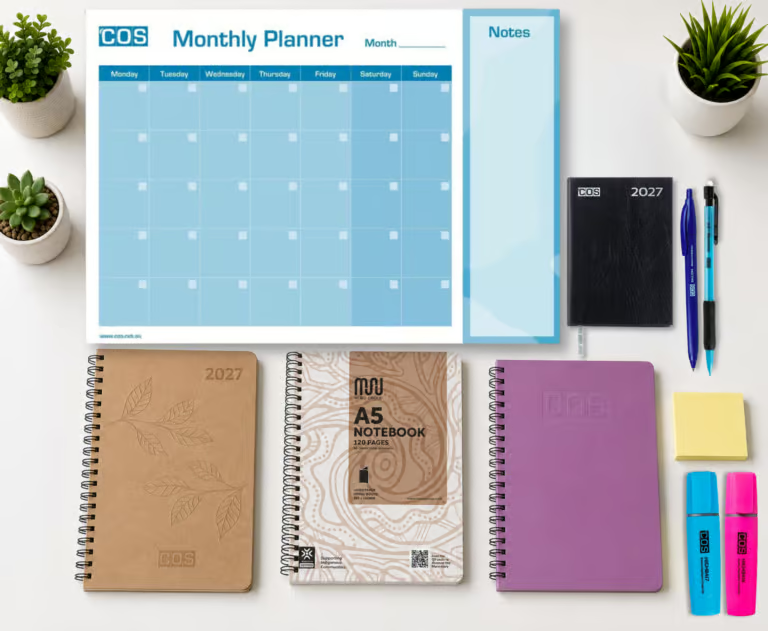
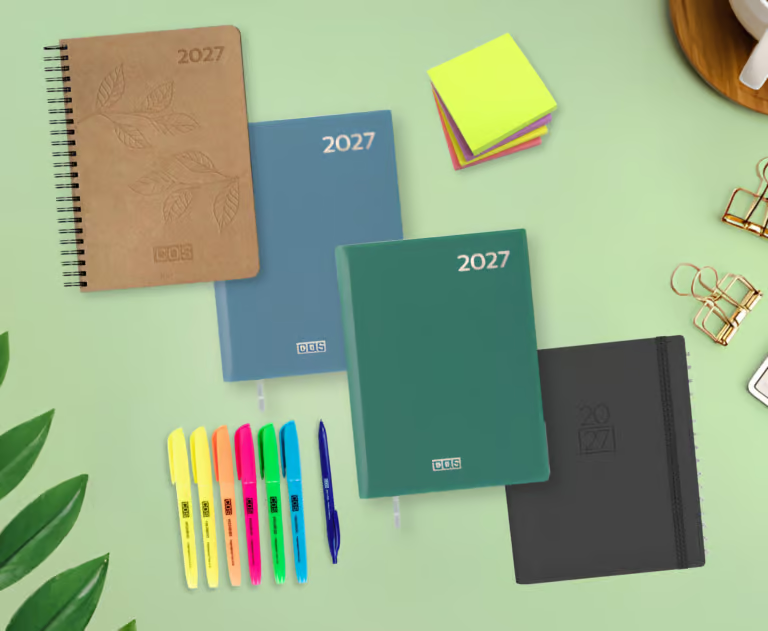
Paper is one example. Recycled copy paper, responsibly sourced white copy paper and paper products with recyclable packaging can support sustainability targets while creating space for supplier diversity. Procurement teams can also review other products such as stationery, notebooks, pens and catering consumables to identify products that align with ethical sourcing standards.
To make this work, create a simple category matrix listing the products you buy most often, current supplier, annual spend, contract end date, sustainability credentials and whether a First Nations business or supplier diversity option is available.
Build respectful supplier relationships
Inclusive procurement is not only about awarding contracts. It is also about how suppliers are engaged before, during and after the buying process. Respectful engagement starts with listening to supplier capability, asking clear questions and avoiding assumptions about scale or service coverage.
Payment terms, onboarding support and forecasting also matter. Providing accurate demand forecasts, clear purchase order processes and timely payment can make partnerships more sustainable. Where the organisation has a Reconciliation Action Plan, procurement activity should be connected to measurable commitments rather than treated as a one-off purchase.
Supply Nation reporting has highlighted the scale of this opportunity. In 2023-2024, procurement spending through Supply Nation members reached $4.6 billion with Indigenous businesses, across 284,864 contracts, showing the role strategy, governance and accountability can play in procurement outcomes.
Set targets, track progress and review regularly
Targets help move inclusive procurement from intent to action. An organisation could start by measuring the number of Indigenous suppliers invited to quote, the number onboarded, the percentage of addressable spend directed to supplier diversity partners, or the number of categories reviewed for inclusive sourcing opportunities.
Public policy settings show why measurement matters. The Indigenous Procurement Policy uses annual targets for the number and value of contracts awarded to Indigenous businesses, as well as mechanisms such as mandatory set-asides and participation requirements for certain contracts. The principles are useful for any organisation: define the opportunity, create an access point, measure outcomes and review performance.
Quarterly reviews can show what is working and where barriers remain. If Indigenous suppliers are invited to quote but not winning work, review the scope, pricing model or evaluation weighting. If internal teams are not using nominated suppliers, check ordering systems, catalogue visibility and account set-up processes.
A practical checklist for inclusive procurement
- Map regular workplace spend across office supplies, recycled copy paper, stationery, catering supplies, labels and filing products.
- Use verified directories and supplier networks to identify Indigenous business options.
- Review tender documents for unnecessary complexity or disproportionate compliance requirements.
- Include supplier diversity and sustainability criteria in category plans and scorecards.
- Provide clear onboarding, purchase order and payment processes.
- Track spend, supplier invitations, awarded contracts and category coverage.
- Review outcomes quarterly and address barriers in systems, catalogues or purchasing behaviour.
Building procurement practices that create lasting value
Building more inclusive procurement practices is not about adding another layer of administration. It is about using everyday purchasing decisions to create fairer access, stronger supplier relationships and more responsible supply chains. For procurement teams, the starting point is practical: know what you buy, understand where Indigenous businesses can contribute, simplify access to opportunities and measure progress over time.
When supplier discovery, tender design and contract management are built with inclusion in mind, organisations can support Indigenous entrepreneurship while still meeting the commercial requirements of quality, value, reliability and compliance. In categories like sustainable office supplies, recycled copy paper, stationery, catering supplies, labels and procurement filing products, inclusive procurement can become part of the way an organisation buys every day.