


Creating a workplace where people feel comfortable asking for support starts long before someone says they are struggling. It is shaped by everyday behaviours, visible reminders, practical resources and leaders who make support feel normal, safe and accessible. For corporate teams, government workplaces and health businesses, the goal is not to turn every employee into a counsellor. It is to build a culture where people notice changes, check in early, know what help is available and trust that asking for support will be met with respect.
Work is a key setting for mental health because many Australians spend a significant part of their lives at work. Beyond Blue notes that mentally healthy work protects people from harm, promotes wellbeing and supports people when they need help. Safe Work Australia has also reported that mental health conditions accounted for 9% of serious workers’ compensation claims in 2021 to 2022, highlighting why prevention, early support and psychologically safe work design matter.
Why people hesitate to ask for help at work
Even in organisations with strong workplace wellbeing programs, employees may hesitate to speak up. Some worry they will be seen as less capable. Others are unsure whether their concern is serious enough to be asking for support. In high-pressure environments such as healthcare, frontline services, customer support and government operations, people may also feel they should keep going because others are relying on them.
A supportive culture reduces that hesitation. It gives employees permission to ask for help early, before stress becomes crisis. It also makes it easier for managers and peers to respond in a practical way. That might mean adjusting priorities, helping someone access an employee assistance program, offering a quiet space for a conversation or simply checking in again a few days later.
1. Make support visible before it is needed
People are more likely to use support pathways when they know where to find them. That is why visible, everyday communication is so important. Noticeboards in staff rooms, kitchens, corridors and shared work areas can be used to display employee assistance program details, mental health at work resources, manager contacts, emergency support numbers and simple conversation prompts.
For desk-based teams, desk cards can act as quiet reminders of how to start a supportive conversation or where to go for help. In customer-facing, clinical or government service environments, display holders can keep wellbeing resources accessible at reception desks, staff hubs, meeting rooms and private consultation areas. The aim is to make support easy to notice without making it feel intrusive.
2. Train people to ask, listen and follow up
A mentally healthy workplace gives people the confidence to have supportive conversations. Workplace resources encourage organisations to help employees learn when and how to have conversations that could change a life. These conversations do not require employees to diagnose a problem or provide expert advice. They require care, attention and a clear next step.
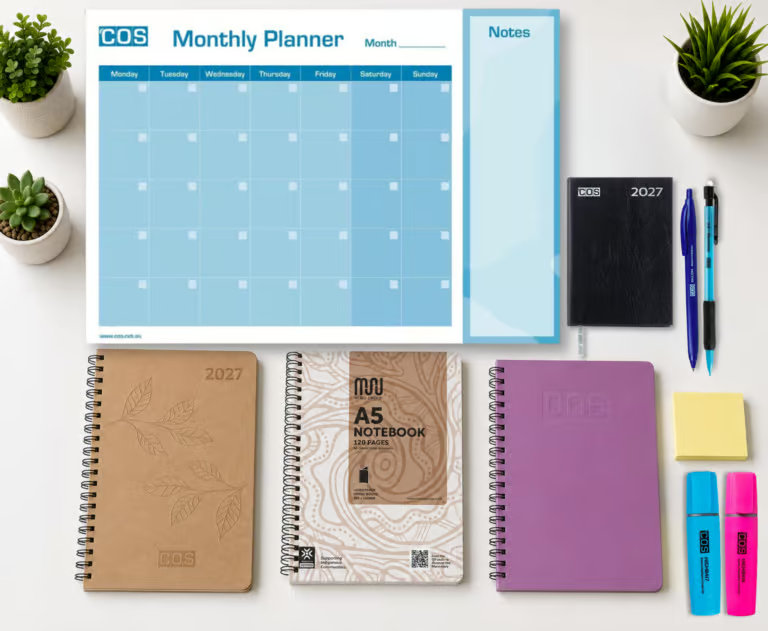
A practical model is to encourage people to ask, listen, encourage action and check in. For example, a manager might say, “I’ve noticed you seem under pressure lately. How are you going?” They can then listen without rushing to solve the issue, ask what support would help and agree on a follow-up. Notebooks and planners can support this process by helping managers capture agreed actions, track follow-ups and schedule wellbeing check-ins as part of regular team routines.
3. Build trust through everyday leadership behaviour
Supportive workplaces are built through consistent leadership behaviour. Employees notice whether leaders take breaks, respond respectfully to mistakes, manage workloads fairly and follow through when concerns are raised. If leaders only talk about workplace mental health during awareness days, support can feel performative. If they model healthy habits and make wellbeing part of normal team management, support feels genuine.
For corporate, government and health businesses, this means looking at how work is designed as well as how wellbeing is promoted. Are workloads reasonable? Are roles clear? Do people have enough autonomy to manage their day? Are changes communicated early? Are employees recognised for good work? These factors influence whether people feel psychologically safe enough to go asking for support.
4. Create private spaces for sensitive conversations

People are unlikely to go asking for support if they feel exposed. Privacy matters, especially in open-plan offices, shared clinical workspaces, service counters and high-traffic government workplaces. Privacy screens can help create more discreet areas for one-on-one conversations, wellbeing check-ins or temporary quiet work zones. They can also signal that confidential conversations are welcome and respected.
Where possible, organisations should identify specific places where employees can speak privately with a manager, HR representative, peer support contact or wellbeing lead. This is particularly important for health businesses and frontline teams, where employees may need to decompress after difficult interactions while still maintaining confidentiality and professionalism.
5. Turn wellness ideas into year-round habits
R U OK? Day and World Mental Health Day can be valuable prompts, but should not be the only moment when employees are encouraged to check in. The best workplace wellness ideas are practical, repeatable and connected to everyday work. This might include monthly team check-ins, peer support noticeboard prompts, wellbeing resource stations, manager conversation guides, reflective activities in team meetings or a quarterly review of workload pressure points.
Products such as noticeboards, display holders, desk cards, notebooks and planners can help keep these habits visible. A noticeboard might feature one conversation prompt each month. A planner might include a recurring reminder for managers to check in with team members. Desk cards can outline what to say when someone is not okay. These small tools help turn good intentions into consistent action.
6. Make support pathways clear and easy to use
A supportive conversation is only useful if people know what to do next. Organisations should clearly communicate available support options, including employee assistance programs, internal wellbeing contacts, HR pathways, mental health first aiders, peer support networks and external crisis services. The Fair Work Ombudsman describes employee assistance programs as confidential counselling services that may be available through a workplace.
Clear pathways are especially important when someone says they are not okay. Managers should know whether they can offer flexibility, adjust workloads, connect the employee with HR or suggest professional support. Employees should know that asking for support will not automatically trigger disciplinary action or unwanted attention. The message should be simple: support is available, confidential where appropriate and part of how the organisation looks after its people.
7. Design wellbeing communication for different work settings
Not every workplace receives information in the same way. Corporate teams may respond well to manager-led conversations, planning tools and digital reminders. Government workplaces may need consistent messaging across multiple locations, departments and frontline service points. Health businesses may need quick-reference resources in staff-only areas, shift handover spaces and consultation rooms.
A useful approach is to combine permanent reminders with timely campaign materials. Privacy screens can help create appropriate spaces for confidential discussions. Together, these tools help embed workplace wellbeing into the physical work environment, not just an intranet page.
Checklist: how to support employees before they ask
- Use noticeboards to display wellbeing contacts, EAP details and conversation prompts.
- Place display holders in shared staff areas with accessible mental health at work resources.
- Provide desk cards with simple prompts for asking, listening and following up.
- Encourage managers to use planners to schedule regular check-ins and workload reviews.
- Use notebooks to record agreed actions from wellbeing conversations, while respecting confidentiality.
- Create private spaces with privacy screens for sensitive conversations.
- Train managers and team members to respond calmly, respectfully and practically.
- Review workloads, role clarity and communication practices as part of broader workplace wellbeing.
A workplace in which people feel comfortable asking for support is not created by a single poster, policy or event. It is created through repeated signals that support is safe, normal and available. When organisations combine visible resources, practical tools, private spaces and confident leadership, they make it easier for employees to speak up early and receive the support they need.
Frequently asked questions
How do you create a workplace where people feel comfortable asking for support?
Create a workplace where people feel comfortable asking for support by making help visible, training people to have supportive conversations, building trust through leadership behaviour, providing private spaces and making support pathways clear. The most effective approach is ongoing and practical, not limited to one awareness day.
What are good R U OK? and Mental Health Day workplace ideas?
Good R U OK? and Mental Health Day workplace ideas include team check-ins, conversation cards, wellbeing noticeboards, resource stations, manager training, peer support networks and regular follow-up activities. The key is to turn the day into a year-round habit of checking in, listening and connecting people with support.
How can managers support mental health at work?
Managers can support mental health at work by creating reasonable workloads, communicating clearly, checking in regularly, listening without judgement and helping employees access appropriate support. They should also follow up after a conversation and make sure actions are practical, respectful and documented appropriately.