


Gratitude at work typically happens when there’s an awards program, a major project done, or an employee survey. People then send one-off messages on sticky notes or thank-you cards that only have a limited impact. What most of them don’t know is that appreciation is most effective when there’s a system built through simple yet repeatable rituals, not just slogans on display boards.
Greater Good’s article about transforming a workplace through gratitude explains that appreciation should be a part of the office culture. The key to making this happen is to be consistent with the simple gratitude rituals as yearly awards programs alone won’t be sufficient to transform into a healthy workplace. Organisations should create a culture around gratitude.
Considering this information, workplace recognition and appreciation should be done regularly regardless of how small they are. Consistent acknowledgement improves workplace morale, experience, and connection.
Here are some employee appreciation ideas.
Make Employee Recognition a Ritual in a Regular Team Meeting
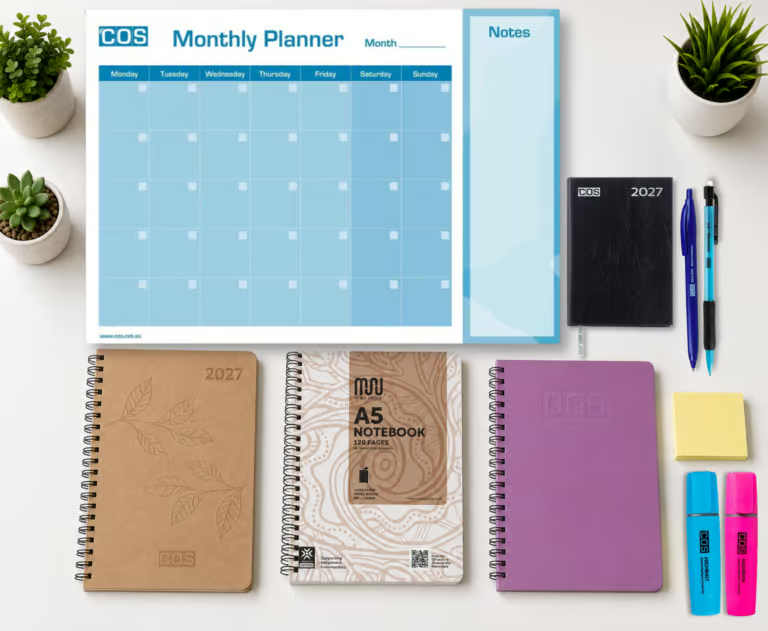
Gratitude at work can start as a regular team appreciation exercise. You don’t need to organise another meeting for this. You can create a channel on your communication tool for recognising people, make a recognition standee for monthly achievers, give away stationery or planners, or spend a few minutes in each meeting to acknowledge people.
The goal of making recognition as a regular exercise is to ensure each acknowledgment highlights consistency instead of extravagance. This makes this ritual easier to maintain even during busy periods.
Recognise Good Behaviours You Want to Keep Seeing

Good behaviours you want to keep in the office don’t just deserve generic appreciation praises, such as “Great work!” or “Good job!”. Recognising specific behaviours that contribute to the success and growth of employees is crucial. These can include:
- Showing care for co-employees, communities, and customers
- Enhancing a system or process
- Helping and supporting colleagues during tight deadlines or demanding times
- Effective collaboration among teams
By specifying certain behaviours, employees can identify which ones to keep and are aligned to your business values and principles.
Establish Workplace Recognition Practices That Work for Different Environments
Corporate, health and government offices have different workforce patterns, pressures, and structures. That’s why it’s important to create gratitude rituals designed for each environment. Ideally, here are the effective formats for recognition:
- A corporate office can follow peer recognition during team meetings.
- A government agency can recognise a public servant’s impact on the people monthly.
- A health facility can organise team huddles for recognising a healthcare worker’s excellent cooperation and patient care.
Organisations may also consider having digital recognition gatherings for field and frontline workforces. This allows fair recognition to everyone and doesn’t limit to physical meetings only.
Encourage Peer-Led Recognition
The recognition part during team meetings should be not just manager-led but also peer-led. Allowing colleagues to give praise makes the recognition feel more relatable and authentic. You can promote monthly peer nominations, a rotating recognition champion, and a program that lets an employee acknowledge another. With these, gratitude at work becomes a part of a team’s tradition and behaviour rather than an HR-led program.
Include Gratitude in Your Systems and Processes
Normalise including gratitude in your systems, such as:
- Quarterly business reviews
- End-of-shift huddles
- Town halls
- Performance conversations
- Onboarding
- Project retrospectives
Youd don’t necessarily need to create programs or systems solely for recognition. You can incorporate gratitude practices into your working processes. This makes it more consistent to conduct, reinforces positive behaviours, requires less administrative efforts, and feels more natural.
Keep Gratitude Rituals More Inclusive and Credible

Workplace recognition isn’t a popularity contest. Being consistent with having simple praises at every team meeting is enough. You just need to be specific with your recognition, highlight contributions over personality, and allow gratitude rituals across roles and all locations. Leaders can participate in the recognition part, but they shouldn’t dominate the conversation.
Turning Gratitude into a Habit
Gratitude at work isn’t about a large budget for a rewards program or a fancy awarding ceremony but about being specific and simple with praises that highlight contributions to success and improvements. It’s not a matter of who the team should thank but when you should conduct recognition each week for consistency.
A great challenge to start practising recognition is to choose an existing workplace gratitude ritual and include a consistent recognition moment in it for a month. With this, you can create a habit that showcases appreciation more effectively in an operating rhythm and not just an occasional initiative.