

Fire safety in an office or shared facility rarely comes down to technical certification detail. It comes down small everyday actions like keeping a path to the door clear, knowing where the instructions are, not letting a storeroom become a fire risk simply because nobody tidied it. This is not a guide to fire ratings or building compliance. It is a practical look at the everyday preparedness that any office, school or facility can put in place without needing a specialist.
Why Workplace Fire Safety Matters
According to the Productivity Commission’s Report on Government Services 2026, the national rate of accidental structure fires rose to 71.0 per 100,000 households in 2024 to 25, up from 56.4 the previous year. While this measure tracks residential fires specifically, the same everyday causes: overloaded power points, unattended heat sources and cluttered storage, apply just as readily to offices, schools and shared facilities.
Separately, the Australian Institute of Health and Welfare reports that most fire-related injury deaths in Australia are the result of uncontrolled fire in a building or structure, underlining why basic preparedness in any occupied building genuinely matters, not just in higher risk industrial settings.
What Does Everyday Workplace Fire Safety Actually Involve?
At a practical level, workplace fire safety comes down to five ongoing habits: keeping exits and walkways genuinely clear, maintaining visible and current safety instructions, organising records so evacuation and emergency information is easy to find, avoiding overloaded power points and cluttered work areas, and stocking basic safety and first aid items where people can actually reach them. None of this requires technical expertise. It requires consistency.
1. Keep Exits and Walkways Genuinely Clear
The single most preventable fire risk in any office or facility is a blocked exit. Boxes stacked in corridors, furniture pushed against fire doors, or storage left in stairwells can turn a manageable evacuation into a dangerous one. Make a habit of walking exit routes periodically, not just during a formal inspection, and treat any obstruction as something to fix immediately rather than at the next scheduled review.
2. Maintain Visible, Current Safety Instructions
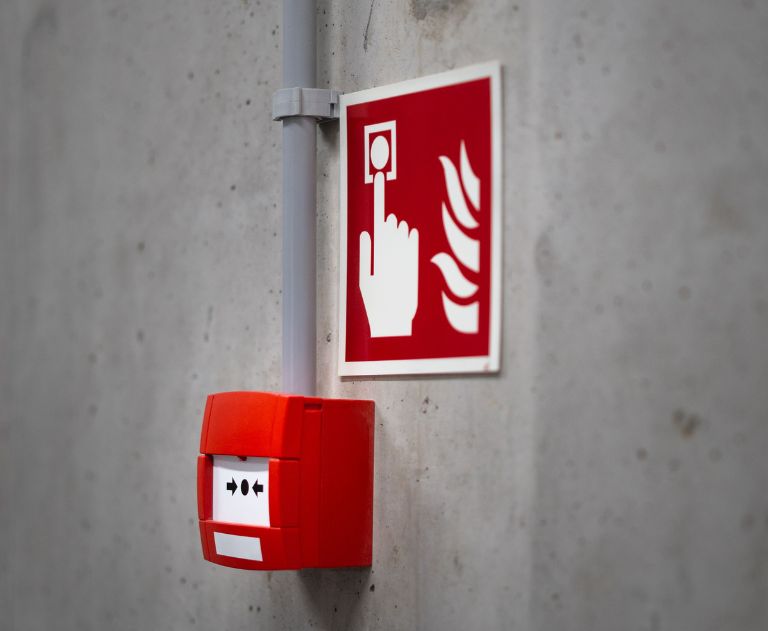
Evacuation instructions, muster point locations and emergency contact details should be genuinely visible, not filed away in a folder nobody opens. Clear, well-positioned safety signage helps people find their way to an exit without hesitation, and should be reviewed whenever a floor plan, staff structure or building layout changes. Outdated signage pointing to a decommissioned exit or an old muster point is arguably worse than no signage at all.
3. Organise Records So Information Is Easy to Find
Emergency procedures, staff contact lists, building floor plans and evacuation responsibilities should be organised somewhere accessible, not buried across scattered folders or someone’s personal inbox. Document wallets keep these records together and easy to grab or reference quickly, while archive and storage boxes suit longer term compliance records that still need to remain accessible rather than disappearing into general storage. A clipboard with the current evacuation checklist attached gives fire wardens or duty staff something practical to work from during drills or genuine incidents, rather than relying on memory.
4. Avoid Overloaded Work Areas and Power Points
Cluttered desks and overloaded power boards are a genuinely common, everyday fire risk hiding in plain sight. Avoid daisy chaining power boards, keep heat generating equipment clear of paper and fabric, and ensure storage areas are not so packed that airflow around electrical equipment is restricted. A well organised office storage and filing system system does more than tidy a space. It removes the kind of dense, disorganised clutter that gives a small fire more to feed on and makes a room harder to evacuate quickly.
5. Stock Accessible Safety and First Aid Supplies
A well-prepared workplace keeps basic safety items stocked and genuinely reachable, not stored behind locked cupboards nobody has the key to. A stocked first aid kit and accessible first aid supplies support any incident, fire related or otherwise, while a stable step stool prevents staff from improvising with chairs to reach stored supplies or check equipment mounted at height. Spill kits and general safety supplies kept in logical, well-known locations mean staff can respond to a range of everyday incidents without searching for equipment mid emergency.
Making Fire Safety an Everyday Habit
None of the habits above require specialist training or a major renovation. Practical, everyday safety procedures built into the normal rhythm of a workplace do more for genuine preparedness than an annual compliance tick box ever will.
Genuine fire safety preparedness in an office or shared facility is built from ordinary, repeated habits rather than a single annual review. Clear exits, current signage, organised records, tidy storage and accessible supplies together create a workplace that is measurably better prepared, without requiring anyone to become a fire safety technician to achieve it.
Frequently Asked Questions
How often should exit routes be checked for obstructions?
Ideally on an ongoing basis rather than only during scheduled inspections. A quick visual check as part of a regular walkthrough, weekly in busier facilities, catches blocked exits before they become a genuine hazard.
Does fire safety preparedness differ much between offices, schools and other facilities?
The underlying habits are largely the same across settings: clear exits, visible instructions, organised records, uncluttered storage and accessible safety supplies. What differs is scale and the specific evacuation procedures relevant to each building, which should always be confirmed with the appropriate building or facility manager.
Who should be responsible for checking fire safety basics in a workplace?
Responsibility works best when it is shared rather than resting on one person. Nominated fire wardens or duty staff can lead formal checks, but everyday habits like reporting a blocked exit or an overloaded power board are most effective when every staff member feels able to flag them, not just those with an official safety title.