

Every Australian workplace needs PPE equipment selected for its actual hazards, workers and tasks. A practical baseline may include suitable gloves, safety goggles, emergency supplies, visible signage and identification accessories. Higher-risk work may also require hearing protection, respirators, protective clothing, safety footwear, helmets or fall protection. The right mix must follow a workplace risk assessment, relevant work health and safety duties, manufacturer instructions and applicable Australian or joint Australian and New Zealand Standards.
Personal protective equipment is an important part of workplace safety, but it is not the first or only control. Safe Work Australia describes PPE as one of the least effective risk controls, to be used after higher-level measures such as eliminating a hazard, replacing it with something safer, isolating people from it or applying engineering and administrative controls. PPE acts as the final barrier when risk remains.
Why PPE remains essential for Australian workplaces
Workplace harm remains significant. Safe Work Australia’s 2025 national statistics report 188 worker fatalities from traumatic injuries in 2024 and 146,700 serious workers’ compensation claims in 2023–24, equivalent to more than 400 serious claims each day. The same report found that 84% of serious claims involved body stressing, falls, slips and trips, being hit by moving objects, or mental stress. These figures reinforce a basic principle: safety at work depends on layered controls, clear procedures and correctly selected workplace safety equipment.
The Australian Bureau of Statistics reported that 497,300 people experienced a work-related injury or illness in 2021–22. Of those affected, 66% took time off work. PPE alone cannot prevent every incident, but reliable equipment, training and safe work habits can reduce exposure and improve readiness when hazards cannot be fully removed.
What PPE equipment does a workplace need?

There is no universal shopping list. A low-risk office, busy warehouse, school science room, healthcare facility and construction site face different hazards. Start by mapping routine, occasional and emergency tasks, then select controls for each exposure.
- Hand protection: Latex gloves can support short-duration hygiene, cleaning and first aid tasks where they are chemically compatible and allergy risks have been assessed. Nitrile, vinyl, cut-resistant, heat-resistant or chemical-resistant gloves may be more suitable for other hazards. Do not assume one glove protects against every substance or task.
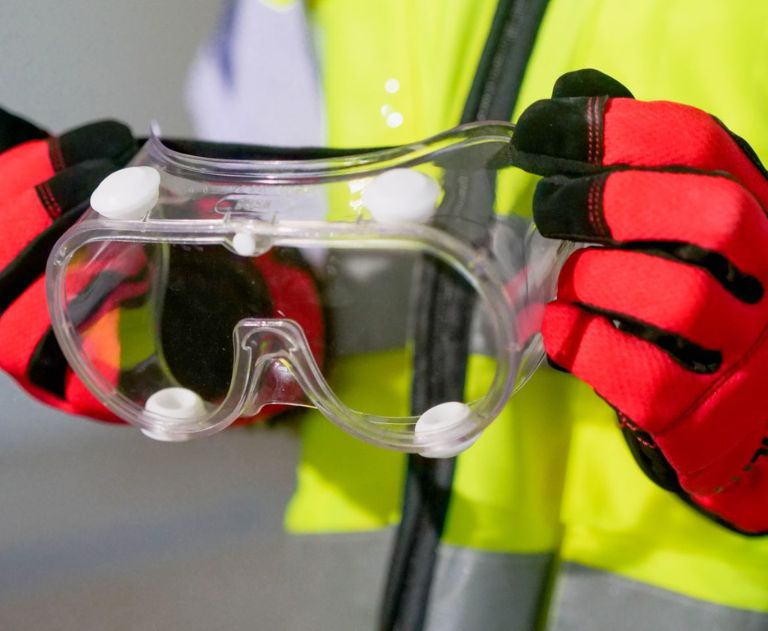
- Eye and face protection: Safety goggles help protect against dust, particles and splashes. Select sealed, vented, impact-rated or chemical-splash models according to the hazard. Face shields may provide added coverage but may not replace primary eye protection.
- Respiratory, hearing, head, body and foot protection: Where the risk assessment identifies airborne contaminants, hazardous noise, falling objects, splashes, weather or impact hazards, use task-specific respirators, hearing protection, head protection, clothing and footwear.
Workplace safety essentials that support PPE
PPE works best within a broader safety system. Keep first aid kits accessible, clearly identified, appropriate for workplace size and risk, and regularly restocked. Position safety signage where it can warn people before they enter a hazardous area, communicate mandatory PPE and identify emergency equipment. Signs support controls and training but should not be used as a substitute for removing or reducing hazards.
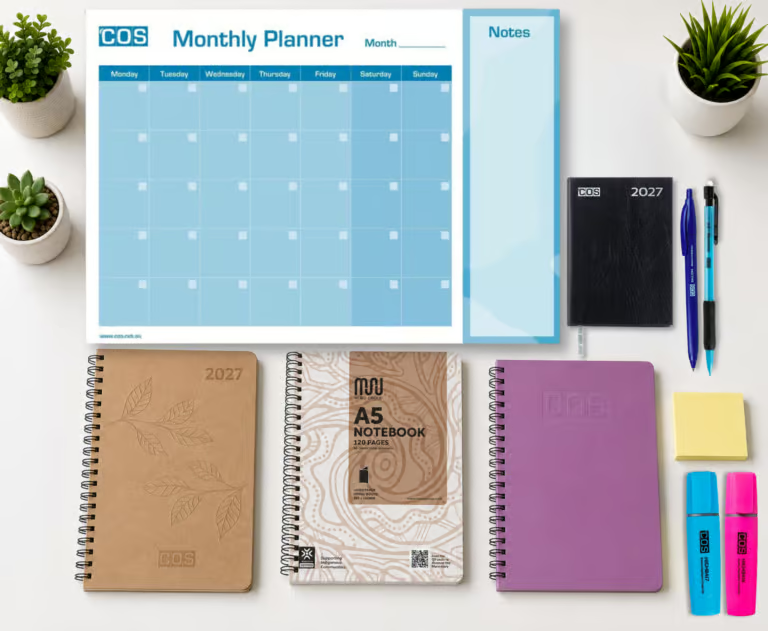
Practical accessories also matter. Lanyards can keep identification or access credentials visible, while clipboards provide a portable surface for pre-start checks, inspections, incident forms and PPE issue records. In operational areas, use breakaway lanyards where snagging is possible and never wear a standard lanyard near moving machinery unless the risk assessment permits it.
Australian PPE standards and compliance
Australian Standards help buyers assess whether products are designed and tested for particular hazards. Examples include AS/NZS 1337.1 for occupational eye and face protection, the AS/NZS 2161 series for occupational protective gloves, AS/NZS 1715 for selecting, using and maintaining respiratory protection, AS/NZS 1270 for hearing protectors and AS 4602.1 for high-visibility garments used in high-risk applications. Requirements change, so confirm the current standard and any regulator or industry-specific rules before purchase.
For example, AS/NZS 1337.1:2010 specifies minimum requirements for occupational eye and face protectors against hazards including flying particles, dust, splashes and aerosols. A standards marking is useful only when it matches the exposure. Check product documentation, instructions, limitations, test ratings and compatibility with other equipment.
How to select the right PPE equipment
- Identify hazards and tasks. Consult workers and review safety data sheets, incident records, near misses, equipment manuals and site conditions.
- Apply the hierarchy of control. Eliminate or minimise risk before deciding what residual exposure PPE must address.
- Match the protection level. Verify material compatibility, ratings, standards, duration of use and whether disposable or reusable equipment is appropriate.
- Check fit and compatibility. PPE must fit the individual and work together. Goggles should not disturb a respirator seal, gloves should preserve necessary dexterity and hearing protection should remain effective with other headgear.
- Trial with workers. Comfort, mobility, visibility and communication affect consistent use. Include different sizes and accommodate individual needs.
- Plan storage and replacement. Set inspection, cleaning, expiry and restocking schedules. Remove damaged, contaminated or expired items from service.
A coordinated procurement approach helps avoid inconsistent protection across sites. Standardise approved products where hazards are comparable, but retain task-specific options. Consolidating PPE, first aid, signage and related supplies can simplify ordering, stock visibility and replenishment. Browse personal protective equipment by category, then confirm each product is suitable for the intended task before issue.
Build safe work habits around PPE
Reliable PPE depends on everyday behaviour. Train workers before use and refresh instruction when equipment, tasks or hazards change. Demonstrate how to put on, remove, adjust, inspect, clean and store each item. Make PPE available near the point of use, keep instructions clear, encourage workers to report poor fit or defects, and supervise compliance consistently. Visitors and contractors should receive the same site-specific expectations.
Schedule regular workplace inspections and record findings on checklists kept on clipboards or digital forms. Review PPE after incidents, near misses, process changes and worker feedback. Good safety at work is not demonstrated by cupboards full of equipment. It is demonstrated when the right item is available, fits properly and is used correctly every time.
Make PPE part of a complete safety system
PPE equipment is most effective when it is selected through consultation, matched to a verified hazard and supported by higher-level controls. Combine compliant products with training, inspections, visible signage, accessible first aid kits and dependable replenishment. This practical approach turns personal protective equipment from a compliance purchase into an active part of safer, more consistent work across Australian workplaces.
Frequently Asked Questions
What PPE equipment should every workplace have?
Every workplace needs PPE determined by its risk assessment, rather than a generic kit. Common needs include suitable gloves and eye protection, supported by first aid kits, signage and emergency procedures. Higher-risk tasks may require respiratory, hearing, head, body, foot or fall protection.
Who is responsible for providing PPE in Australia?
Under the model WHS framework, the person conducting a business or undertaking must provide required PPE, unless another PCBU has provided it, and must ensure workers receive appropriate information, training and instruction. Workers must use PPE as instructed and report problems. Always check the law and regulator guidance applying in your state or territory.
How often should PPE be replaced?
Replace PPE when it is damaged, contaminated, expired, no longer fits or fails inspection. Follow manufacturer instructions and workplace procedures. Disposable gloves should not be reused, while reusable items need defined cleaning, maintenance and storage practices.